News…… or is it

We discuses and watched a lot of the Newsroom. The mane argument was is news really news. This is very questionable. What is the job of news in modern days. This is somewhat unknown…

Image result for question marks

News used to be bipartisan and what the people need to know. It was never about getting the highest ratings it was about telling the people what happened in the world and what they really needed to know.

Image result for the news room

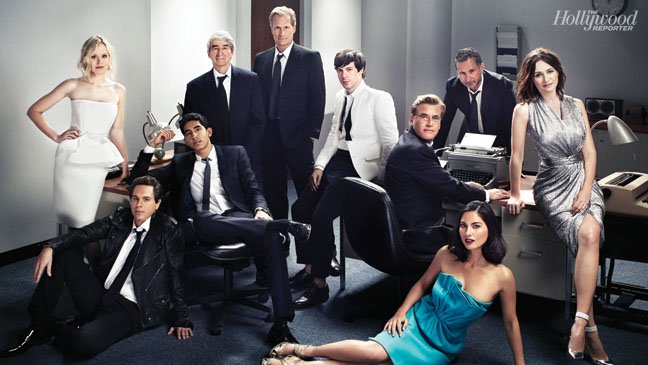
We discussed and watched a lot of the Newsroom. The main argument was is news really news. This is very questionable. What is the job of news in modern days? This is somewhat unknown…

News used to be bipartisan and what the people need to know. It was never about getting the highest ratings it was about telling the people what is happening in the world and what they really needed to know.

Image result for bipartisan
Image result for pie in the sky

The Newsroom when it first came out it was called pie in the sky according to our professor. Nobody could guess how wrong the people saying that was. Critics hated the show however, the people loved it.The show touches on the reality that news has become entertainment. When they stop following what people wanted to see to cover the oil spill in the Gulf of Mexico “real news” they lost half of all the people who were loyal to them. The had to then back off of true news overnight in order to get them back in fear of losing their audience, covering a politician nudes.

This maybe a slight exaggeration of what happens in real life, however, it’s not all that far off from the truth really. In cable news today we see how much political stance they have spending probably half of their time covering that instead of what is happening around the world.On was the weather it was so bad it was going to cause blackouts however, people don’t care its boring so in the show they ignore it to get screwed by it later that day.


Image result for spys
Image result for broadcasting

Our reading talks about the undercover boss how it and other shows clime to be news but its drama. Not relating to news at all however, it seem somewhat similar and can confuse watchers because it is set in a documentary format. If it bleeds it leads. Stepping away from the newsroom. In real life people think the crime rates in the United States are higher than ever. This simply isn’t true. However, people will log in and watch a full broadcast talking about crime and people who are tough on crime. Nobody wants to hear that crime is low, it just doesn’t sell it’s not entertainment. Many news stories have to be entertaining not necessarily informational. Television unlike newspaper is not forced to tell the truth to the viewers they have the power to lie to people and mislead them.

This Week’s News

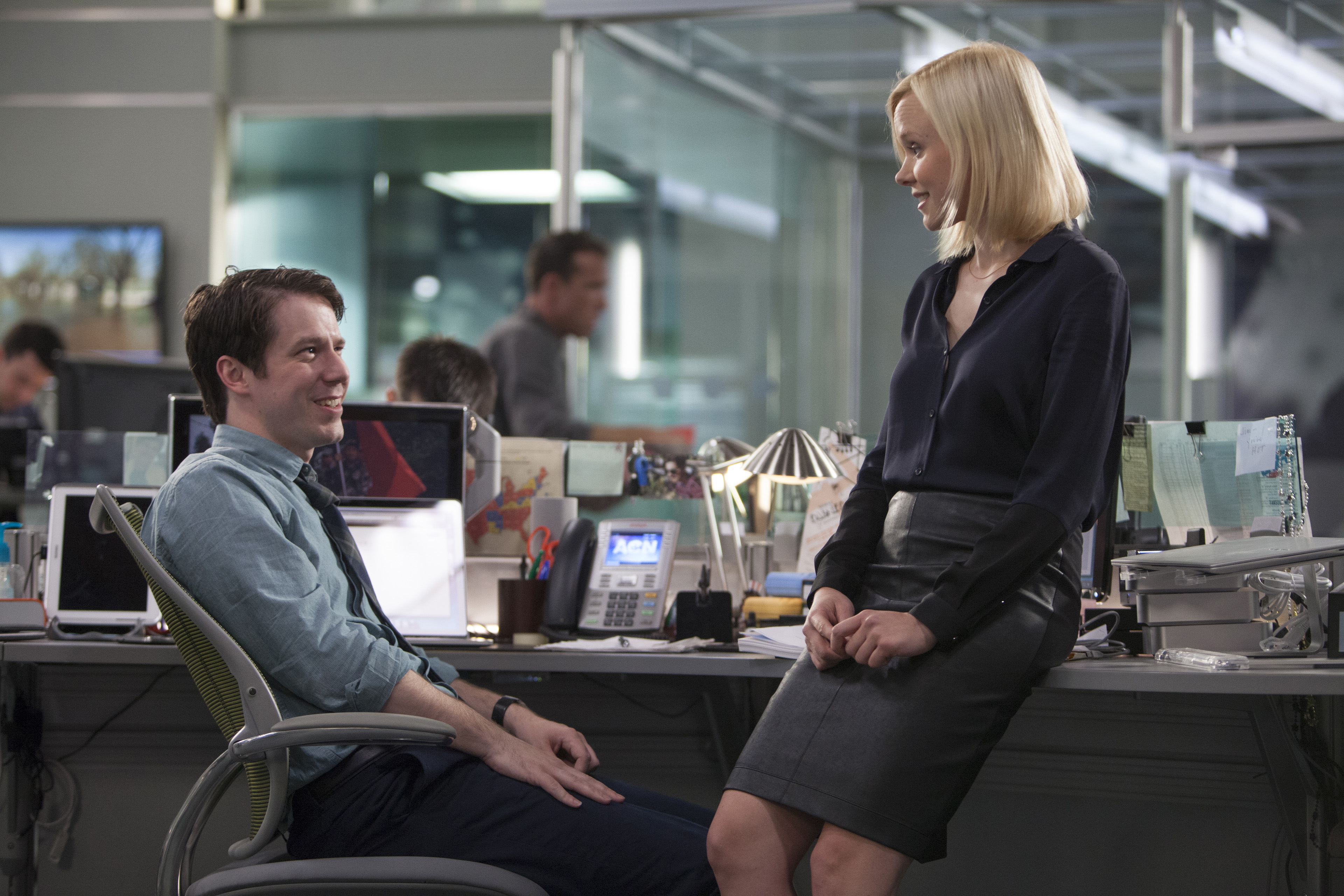
The main focus for this week had to do with the media’s effects on information and more importantly, the news. This was an interesting topic for me this week because this really ties into our generation and how we are connected to the news. We focused this week on watching two episodes of The Newsroom. This show allows us to see the struggles within the newsroom as well as the obstacles a newsroom faces when trying to report on true news as opposed to the news that is out there for pure entertainment.

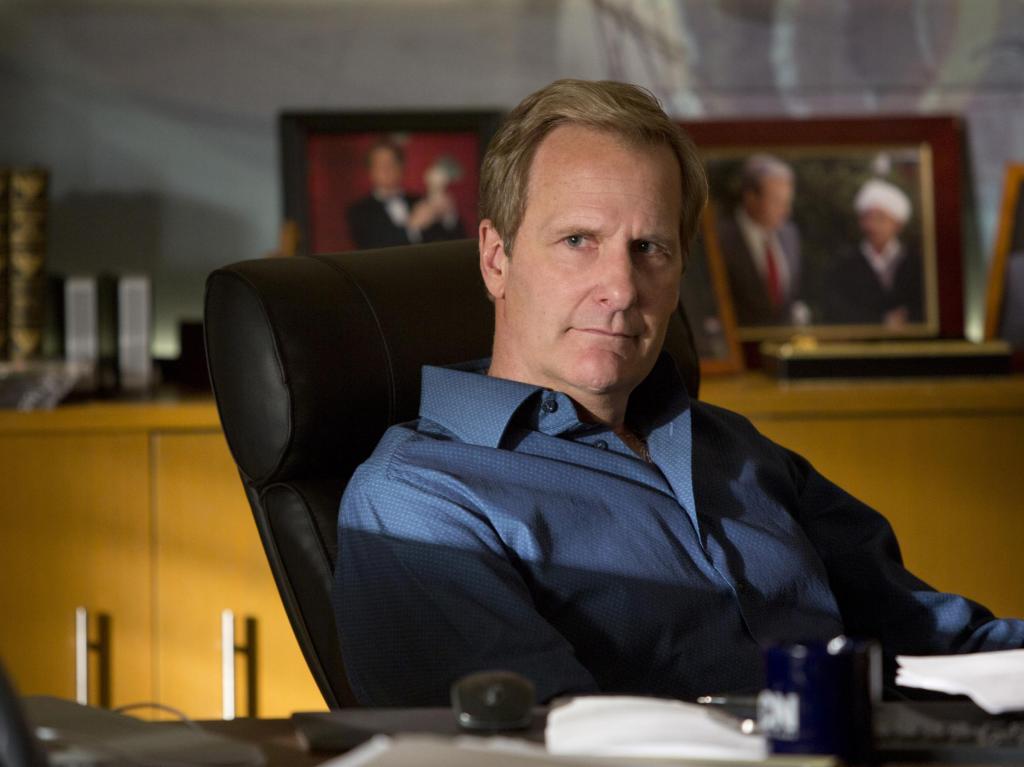
We began by watching episode one, which was called “We Just Decided To.” The series with star anchor Will McAvoy (Jeff Daniels) onstage at a university event with a couple of political experts and a moderator. The liberal and conservative pundits are yelling at each other over him as the moderator and students ask questions. When a young, blonde woman steps to the microphone to ask each person why America is the greatest country in the world, the liberal and conservative experts give there responses. The moderator then turns to Will and pushes him for a real answer. When he looks into the audience, he sees a woman that looks very familiar holding a notepad saying “It’s not, but it could be.” Will then goes off on a rant about how America isn’t the greatest country in the world unless you want to look at ways it’s number one like number of incarcerated prisoners or people who believe in angels. He calls conservatives crazy and liberals losers. After the talk is over, everyone thinks Will is crazy and this whole moment soon goes viral. Will tries to cover this up by blaming it on his vertigo medicine instead of the fact that he was finally just speaking his mind.

Image result for newsroom episode 1
The Liberal/Conservative Event

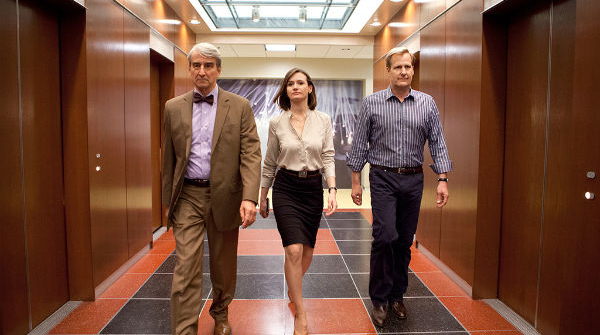
Since this fallout, no one wanted to work with Will at the ACN newsroom. Because of this, McKenzie McHale was brought in to help. McKenzie has been producing the news in war zones in Afghanistan and Iraq for the last few years. It turns out that Will and McKenzie had a romantic past and he goes ballistic when he hears that she is going to be his EP (executive producer). While is bursting allowed in anger, McKenzie and her senior producer Jim Harper show up at the ACN newsroom. Jim was an associate of McKenzie’s through her previous part of her career.

Image result for will mcavoy
Will McAvoy


Image result for mackenzie mchale
McKenzie McHale

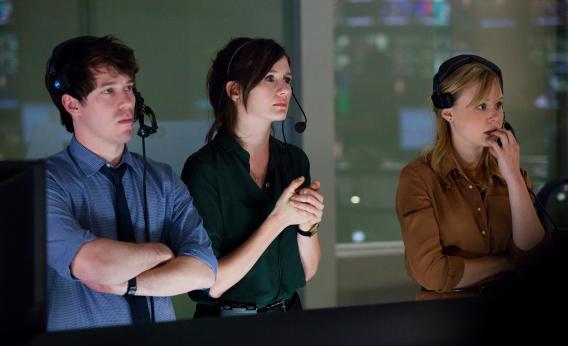
Meanwhile out in the newsroom the first word of the Deepwater Horizon BP oil spill in the Gulf begins to trickle out. After receiving phone calls from highly placed sources, the newsroom scrambles into gear to get this story on the air. The team ends up broadcasting the story while other newsrooms broadcast other top stories. It turns out that this oil spill story became the most popular story at that time, which proved to be a successful broadcast.

In the second half of the week, we watched another episode called “The Blackout Part I: Tragedy Porn.” Since the first episode, ratings have dropped significantly because ACN was not reporting on the Casey Anthony trial. Many viewers began watching the trial on other news networks. After promoting the story ACN gets its numbers back, with a large share of the new audience being female. 

Image result for casey anthony trial
Casey Anthony Trial

After this incident, another news story appears. The new headlines are talking about Anthony Weiner’s “accidental” picture of his groin. In the wake of Weiner accidentally tweeting a groin picture to his 40K followers, ACN feels obliged to give the story a bit of coverage as a ratings boost, and to get a pre-tape interview with Sandy, who will let the world know “what kind of a man Weiner really is.” As the interview is prepped, a 98 degree heatwave hits, which knocks out the entire power of the news room turning it into a blackout.

Personally, I was always on and off with watching the news. It really wasn’t until I got a little older that I got my news through social networking. According to the textbook, “young adults have a reputation for being connected to one another and disconnected from the news, but a survey found that mobile devices and social networking are keeping them more engaged with the broader world than previously thought.” Since I only use Instagram, I get some news from there as well as other news applications. The textbook also says “the survey of Americans ages 18-34 found that two-thirds of respondents said they consume news online regularly, often on a social networking site.” Instagram isn’t just the only place to get online news. There are other news apps available as well as social media apps like Twitter where many people get their news daily.

Image result for instagram
Image result for twitter

-Tyler Tanevski

NEWS

This week in Mass Media we discussed the news and the impact it has on the world. Cable news is often flawed, inaccurate, and heavily opinionated. For me, if I had to watch the news, I would want the most realistic and straight to the point. All the extra arguing and sugar coating just would not do it for me. In order for us students to understand the news, we watched two episodes of “The Newsroom” in class.

In the first episode we watched titled “We Just Decided To”, a troubled news anchor Will McAvoy who returns after a few year hiatus after truthfully answering a group of students about the current state of America. He comes back to a much different environment and struggles to adapt. His ex girlfriend also had a higher role there which was hard for him to deal with since there was clearly hard feelings left. Will must adapt and work with his new team to cover an Oil Spill off the coast of Louisiana. The episode did a great job portraying how dramatic and chaotic covering a breaking story can be. It also shows how hands on covering a story can be and how many people are needed in order to give a great product.

In the second episode we watch, “The Blackout, Part 1: Tragedy Porn” it shows how choosing not to cover a story because it seems more like entertainment as opposed to news can take a toll. The team chose not to cover the Casey Anthony trial because it was more of a circus act than a legitimate story. They lost half their viewers and it forced their hand to cover the trial in order to regain the followers. Mack was extremely against it, but Will and Skinner thought it was crucial to cover it. I thought this episode was interesting because it showed more of the real side of things which is news channels being worried about views, which has a direct correlation to the content. While covering this story, it knocked off many other stories in order to use an ample amount of time. This shows how news outlets cover the entertaining story, rather than other very important things. The content in which we receive is selfishly used for their own success. It just makes you think, What else have we missed on?

I do not pay much attention to the news. I do know whats going on because it is hard to not know. But I do not know the ins and outs of every story. To be honest, I do not really care. Most of the stories are depressing and just jammed down your throat. When I do seek news, its usually on social media from a legitimate source such as NY Times. I think it is ignorant for people who completely avoid the news, though. I feel as citizens we should know what is going on. There is a very fine line between not wanting to know, and tuning it out.

BREAKING NEWS!!!

Breaking news! This week in class we went into depth about news, and the actions that lead up to how the news is told. This topic is very intriguing to me, because it conveys how certain news broadcasters either spread propaganda, or cover stories that are meaningless to the grand scheme of things. An example of something like this would be, in previous week of class, how the news was non stop broadcasting Justin Bieber’s arrest, although there were much larger stories to be told to the public. This just goes to show the real objectives of certain TV news providers. They would rather focus on gossip than actual news. Another example of this would be from today’s class in an episode of newsroom. In this episode the Atlantic Cable News (ACN) the news team wanted to go in a direction where they reported real news that people should hear. However, they lost 50% of they’re viewers because they weren’t reporting the hot gossip of the Casey Anthony story. Yes this story was a big deal, but it shouldn’t have been broadcast on every news station when there were other more important stories on the horizon. This story was strictly to get ratings up because in the cable news world ratings mean everything. The sad truth of the matter is that exaggerated/entertaining news will be told, rather than the boring cold hard facts.

In the first episode of newsroom, ACN was facing inner conflict on weather to follow up and report a story, that most thought wasn’t a big deal, on the disastrous oil spill in the Gulf of Mexico. The problems that were faced was that the newsroom wasn’t set on this story and thought they should go into a different direction. I thought it was a unique experience to watch how news broadcasters actually went about to finding the right story to report. In the end it turned out the code yellow report actually turned into a code red and Will McAvoy proceeded to nail the broadcast.

I personally have been getting updated and watch the news more often since being in this class. I get notified on my phone by a few news apps, and actually have been physically watching the news with coffee in the morning. But my main source would have to be twitter. The top 10 most important things on twitter helps me understand whats trending around the world at this current moment. I was first informed of the presidential impeachment rumors on twitter and then I proceeded to follow up on it through cable news. This is a story that simply cannot be ignored, and if I’m able to get some facts on twitter I will continue to use it for news.

News and Information

This week in class, we heavily discussed the media’s effect on news and information. By doing so, we watched two episodes of The Newsroom.

“We Just Decided To” was the pilot of The Newsroom, which was the first episode we watched during class. In the opening scene, news anchor Will McAvoy, is asked by a college student why America is the greatest country in the world. Being a well-respected and unproblematic man, he answered truthfully, saying it is not. He went on and said he believed in the country America used to be.We longer have our Golden Age. After the aftermath of his comment, he returned back to his job to find that most of his staff left and his new executive producer is his ex-girlfriend. To sum everything up, him and his team, had to work together to cover the disastrous oil spill in the Gulf of Mexico.

“The Blackout, Part 1: Tragedy Porn” was the last episode we watched during class. We discovered the news team lost half of their ratings due to the increase of ratings to another news network. For the ratings to improve, the news team had to cover the Casey Anthony case, which was about a woman who was accused of murdering her three year old daughter, Caylee. But by covering this story, it jeopardized many other worthy stories that could have been covered.

Personally, I enjoy keeping up with the news. I believe staying up to date with the news is an effective and beneficial way to have lots of knowledge about things that are currently happening in our world, good or bad. Especially, the fact that our country has never been so cruel and harsh to each other, it is so important to know about every little detail. We are facing a shit ton of news which the news itself cannot even handle. The impeachment on Donald Trump has been something every single person living here in the United States of America should care about. Whether you are in favor of him or not, this is not going away. We cannot pretend this not happening!

I am not going to lie, I get most of my news on social media, especially on Twitter. Twitter has this feature where it has the top ten most important things going on that day, and most of the time it is only silly things. Getting my news from Twitter is better than not receiving news at all.


Week 12: News

This week we read, watched and talked a lot about News. I find the topic of news so interesting to talk about especially in a college setting where most of the students have grown up with receiving the news mostly, if not only on their phones and via technology.  In the chapter it stated that, “Seventy percent of young adults said their social media feeds include a mix of viewpoints, increasing their chance of reading a wider array of content” (page 236) I find this is important, however I am curious at how accurate that images.jpegnumber is, and if people release the full extent of the biased news that they receive. While new technology gives you access to an abundance of news, it allows you to choose what you see, leading people to gravitate towards what they agree with or what they are comfortable reading and hearing.
In both The Newsroom episode that we watched this week, we were able to see the struggle of the newsroom at that time and there right to repot true news in oppose to exaggerated news or news that was purely there for entertainment. They were trying to get their ratings up and make sure they didn’t lose any viewers, but in order to do so they had to share stories that were more interesting and replace them with stories that may be more boring but at the same time much more important. Unknown.jpeg

I personally do not follow the news as much as I would like and struggle to find valid and interesting resources. Any news I do find I will often search up after the fact and look into the summary, however, this leads me to read often very biased responses to the news so that I do not get as frustrated reading a report that I strongly disagree with. In such a divided time within our country, the internet and social media are filled with an abundance of strong and split opinions, each believing they are right. This does not leave much room for a balanced story that simply repost what is happening, rather than all the problems and thoughts that come with it.

Less and fewer people seem to have time for the news, whether they actually do or not the idea of time seems to be crushing on this younger generation, where things are often rushed and have down, information only partially read oreceiveded. I do not know if this is due to increasing technology or just somehting that always is a fear, but I think it hinders the importance of news to many people.

-Grace Hanlon

Media Ethics- Posted Late With Permission From Professor

This week in class, we went over media ethics and how they have played a role in what we see in the media every day. The motion picture companies had little regulation, and none outside of self-regulation, to what they were able to put in their films. In the late 1920’s, there was a large group of researchers who wanted to prove that films were “poisoning” the minds of the youth. This was known as the Payne Fund Study. This study went on to bring in the Production Code for the motion picture industry. The Production Code was put into place to regulate the motion picture industry.

Another thing that we went over in class this week was Cultivation Theory. Cultivation Theory was a theory thought up by researcher George Gerbner that predicted that people who were heavy users of television and film were more likely to see the world as “dangerous, mean and violent” than those who were light users of those mediums. This was also known as “Mean World Syndrome”.

We also watched a short film called the “Human Behavior Experiment”. This film went over different ways that humans will react to situations while alone and also while with others. There were many different examples of this in the film, such as Stanley Milgrim’s experiment with fake electrical shocks to people by subjects who had no idea that it was an experiment. These people would give “shocks” to people in the other room until they would deny to give anymore “shocks” to the person in the other room. There was also the example of the Genovese Murder, when people heard the screams of a woman getting murdered, and did not call the police when they heard it. There was an experiment to see if people would react different to emergencies when they were alone versus when there were others around them. This experiment found that people would help when they believed it was only them that heard, but if there were others they were less likely to help.

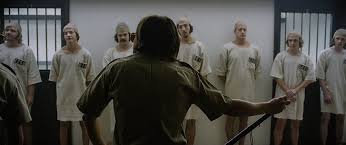
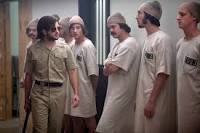
We also saw what happened during the Stanford Prison Experiment. This was an experiment to see how people would act while in a prison like situation. It involved two dozen male students that volunteered to be in an experiment that they had no idea what would happen. The people who would be the “guards” were given an officer like outfit, and the “prisoners” were given a long smock with only a number that they would be referred to for the duration of the experiment. After only six days, a “prisoner” had a mental breakdown, and everyday after that another one would ask to be removed. The experiment only lasted for about half of the original two weeks that it was scheduled to last.

Media and power

This week we had talked about how media can give you some wrong message and make you believe that’s true. And how power can severely effect people’s behaviors.

The documentary we watched in class about the prison experiment from Stanford really shocked me. The experiment is about make half of the random participants to be prisoner and  the rest of the participants to be the guard. The experiment restored the real since of the prison. At first, participants act like what I anticipated, they still acted like normal people outside of the prison. However, the guards start to feel power and things gets changed really fast. I am really shocked by how short they use to incorporated in to the character. Prisoner start to believe they are real prisoner, and because there’s no rules and interference, guards starts to abuse their power, the fake prison even gets more crazy than the real prison. People’s reactions to power really surprised me, the participants knows this is not real but they still gets serious because of the power they have.

The another example of power is people believed in what phone call says with no proof. A manger of a fast food restaurant gets a phone call from a person who claim to be a cop. He sounds like it, so the manager just believed it. He did what the ‘cop’ told him to do, which is to search one of the employee. There’s more unreachable things the ‘cop’ told the manager to do after the first one. And the manager didn’t even remember to check if that is a real cop. He was scared by the power. From a onlooker’s point of view, it is really hard to believe that really happened, but we are not in the moment, that’s how power and media can effect people.

What we can’s avoid these days is there always fake news, people are not likely to check the source of the news when they saw something really shocked them. Publisher sees that and use that when they edit their new in order to get more attention for their article.  It is really easy for people to believe what they saw on internet or any media, people already get used to moving fast right now, it seems like wasting time to check the source. We shouldn’t underrate the power of the media. When you have some negative thoughts, you will be more easy to be influenced by the media.

Media Effects

This week in class we discussed many things but we mainly talked how the media can be misleading and misconstrued. Sometimes we see things about fake news and how some things on television aren’t are always true or that they don’t appear to be true. On Monday, we watched a video in class that i found pretty interesting and it focused on the mean world syndrome that media had installed us with. Mean world syndrome is when you have an idea that more negative information and news that you are shown by how dangerous the world is, and on the most personal level, the more likely you will think you might become the victim in our world. It has been found that you might feel more victimized the more likely you will be. Gerber has said that the more television that you watch, the more paranoid and fearful that you will become. What is more weird about this theory is that though crime rate is dropping, the majority of people believe that it is increasing and there is higher chance of the day to day violence

.I definitely think what you watch has something to do with how you view the world. I watch a lot of crime and police shows and i will say that i am very shocked on what they show on those shows and i think about how some of those things that they show may have actually happened. There are really sad and upsetting stories of bad things happening to people and it makes me upset and you never think that would happen to someone.

Another thing we discussed in our class was the power of authority. One example that stuck to me was when the food manager at a fast food place strip searching a high school employee because someone on the phone was telling them to do so. The person on the phone claimed to be the police and of high authority so the manager thought that she had to listen to commands. The entire scenario was crazy because i kept thinking that i would have never done that type of thing to someone.

Photo: Maskot / Getty Images

The Effects of Media

During this week in class, we spoke about the many effects that media has on human behavior. We forget how much power the media and news has to alter our everyday lives and decisions. The media is thrown at us everywhere we look and the news we also shove anything that they find outrageous but also exaggerate it to the point where it sounds irrelevant. The thing I find interesting is that with all this “fake news” thats out there, people still will believe every word of it because its being told by professionals and they’re supposed to be reliable.

Image result for social media
Image result for fake news

Another topic we spoke about was human behavior and how it could be altered from certain situations. We watched a documentary called “The Big Picture: Human Behavior Experiments”. This documentary depicted experiments that were conducted in the 1990s. The first was the Milgram experiment where he studied how an individual would react to certain authority. The documentary spoke about the deaths related to this behavior. The death of Matthew Carrington was apart of a frat hazing incident where the pledges had to drink as much water as possible as there initiation test. Matthew was unfortunately a pledge and had to endure this initiation test but in doing so drowned from the large amount of water he consumed. The brothers in the frat stood and watched Matthew die because they thought he was just sleeping it off. This shows the effect media has on individuals. The media shows people are supposed to be cool and popular but people don’t understand that these characters that are on the media are false facade of how people act. The documentary also spoke about an experiment conducted by Stanford where normal people were supposed to be prison guards and prisoners. It was to show how far individuals would go without any rules or supervision. These guards increased their authority over time and started to take advantage of their fake power they had towards the prisoners. The prisoners started to react more and more to the fake power the guards were enforcing. They started to really believe they were in a prisoner and did whatever they were told.

Image result for the big picture human behavior documentary 1900s stanford

The last thing we spoke about in class this week was the Agenda Setting Theory. It is the influence the media has on the public. I find it alarming how we rely so heavily on the media for all of our information because most of the time it is false. This power can lead to even more controversy in the world.

-Noah Soriano