This week in class we really focused on the power of the fans. In other words, we learned about the uses and gratification theory. The Uses and Gratification Theory is an approach to understanding why and how people actively seek out specific media to satisfy specific needs. UGT is an audience centered approach to understanding mass communication. It assumes that audience members are not passive consumers of media, but are actually active with their favorite shows. This theory mainly focuses on the view of the audience, and how the fans actually consume the media. Me personally I am a fan of many types of movies and TV shows. Some of these forms of entertainment include the Marvel franchise, Game of Thrones, and the Star Wars series. I absolutely love the Marvel universe and I think everything they’ve done so far has been incredible, and I’m very excited to see where the franchise is going to go from here. As much of a fan I am of Game of Thrones I was very disappointed at the final season, but hopefully with the power of the fans the creators will actually produce something better than that. Or if they make a very good prequel to the story. The power of fandom really has endless powers. For starters, the power of the fans actually brought a TV show back from the dead. Family Guy was not in production for quite some time, and then suddenly by the power of the fans the show came back on air. This is just one example of what the power of the fans can really do.
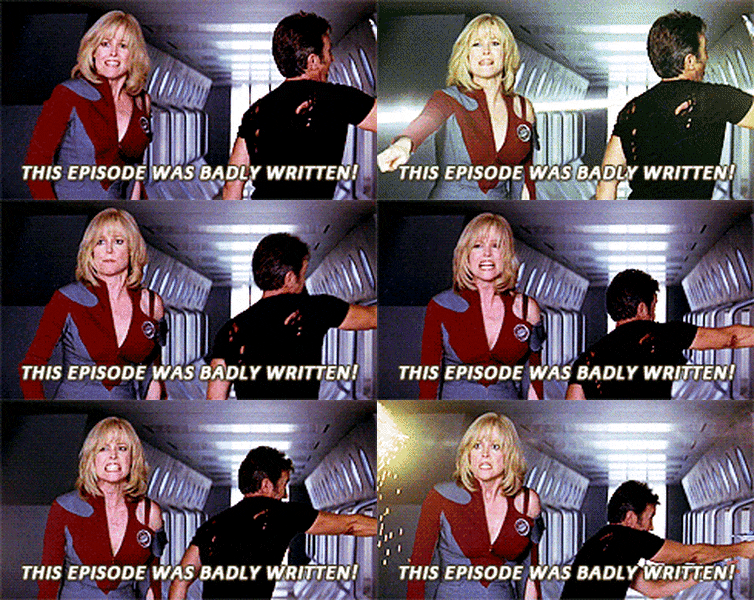
Over the duration of this week we watched the Movie Galaxy Quest, which starred one of my favorite childhood actors, Tim Allen. This movie is exact representation of the uses and gratification theory. This movie is based on a spoof of the classic Star Trek. I thought this movie was very good and I enjoyed it thoroughly. I found it funny how everything they have been doing for the past decade actually became they’re reality. Tim Allen played an excellent role in this movie, He really was caught off guard by the entire situation that he got himself into. He just thought it was a normal gig, but in the aliens reality he was saving their world. This movie is the foundation of fandom, since people were such fans of Star Trek they thought of an idea to make another type of Star Trek movie. Overall great movie and great week of class.
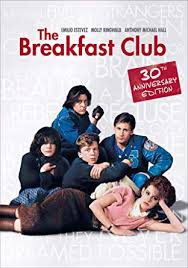
The history of filmmakers portrayed to the world, that a director can indeed be an artist. An artist is someone who practices or creates a work of art. In my opinion, certain directors are artists in their own special way. But, not all directors are artists, the auteur theory helps to convey the differences between the two. Auteur theory is the idea that the director of a film is the primary driving force behind the creation of a motion picture. In other words, the director is the author of the movie. The key differences between an ordinary director and one who uses the auteur theory is detecting the significance of the movie. Although the director is a very important role, sometimes other factors become more significant like the stars, studios, and producers. The auteur theory makes the director stand out in the film, and even become the reason why you watch the movie. A quote from the studio binder helps to convey this point when they said “People referred to a ‘Clark Gable movie’ for example, because in the 1930’s stars ruled the day. Auteur theory came in the early 1950’s, and it changed all that. It shifted some power away from actors, producers, and studio moguls while giving more power to specific types of directors. It ultimately led to a kind of director-crisis.” This director crisis directly correlates with a need for a director that has a signature stamp on how he/she creates the motion picture. The director I will be focusing on is none other than the famous John Hughes. John has been credited with the success of many films over his tenure, but the one film I will mainly be focusing on is The Breakfast Club.
John Hughes has been famously credited with the making of at least 41 films including famous titles like: Ferris Bueller’s Day Off, Sixteen Candles, each Home Alone, each Beethoven, The Breakfast Club, and multiple more highly anticipated movies. John Hughes was born in Michigan in 1950, and he was described himself as a “quiet kid who loved the Beatles.” “Aged 12, he and his family moved to the Chicago suburb North brook in Illinois. Navigating adolescence on the outskirts of a wealthy neighborhood, Hughes’ experiences at Glenbrook High School would inspire his work as a filmmaker.” (The Beginner’s Guide) After graduating high school in 1968 Hughes attended the University of Arizona, he dropped out of his junior year to pursue a career as a copywriter throughout the 70’s. This process helped kick start his film making career in 1983. John Hughes left an imprint on the directing world and was referred by Roger Elbert as “ the philosopher of adolescence”, Hughes’ work – which included eight directorial efforts and numerous screenplay credits – has influenced numerous directors, including Wes Anderson and Judd Apatow, and he endures as one of the most beloved filmmakers of the 1980’s. In John Hughes’s movies he depicts the teenage experience through his directing methods. His greatest contribution as a filmmaker, not just as a director, was the way that his films went against established stereotypes that were not exploited before. In a way, he revolutionized the movie making business by taking simple ideas and created a greater meaning that was previously overlooked. The theme that he portrays in many of his films is that teenagers go against the portrayed childish treatment, and are actually respected adults. He conveyed that growing up as a teenager is a difficult and complex journey that cannot be defined by a single element. This information proves how John Hughes is a director that uses the auteur theory, and depicts his theme into a multitude of movies.
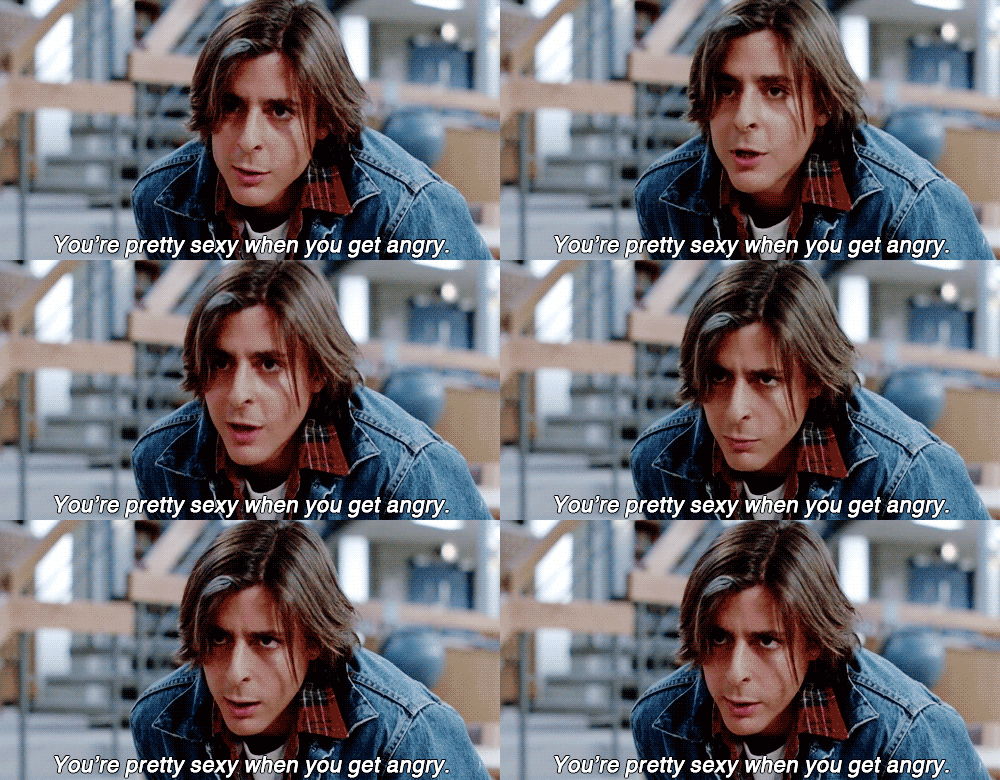
In the movie The Breakfast Club the audience was easily able to pick up on John Hughes teenage theme. The movie begins with many close up shots of the highschool setting, and then proceeds to introduce the characters as they are being dropped off for detention. They all meet in an awkward environment, that is conveyed through full shot lenses, and are met by their detention advisor. Throughout the movie, time moves in a continuous fashion that leads to the end of the movie in chronological order. The five teenagers are trapped in detention and are all different types of people that include:” a brain, an athlete, a princess, a basket-case, and a criminal.”(The Breakfast Club Movie Review) The main plot is that the only thing they all have in common is that they did something wrong and are paying the price for it. The twist is that they actually begin to grow to like each other. Throughout the movie the performances from the actors are spectacular, which is expected with such an all-star cast of young actors. John Hughes used some of these actors on previous movies like Ringwald and Hall. This helped convey his purpose to keep similar actors he worked with. Through the thick of the plot the characters go through conflict with each other and the detention advisor. In the end they all realize they are one alike and share similar traits.
The “R” rating of this film regards the language used, but in my opinion I think it should have been a PG-13 because this film is certainly appropriate for younger teens. In the end John Hughes created and portrayed spectacular films that follow the trend of teenage adolescence. The best way to wrap this up is a quote I found that says “We accept the fact that we had to sacrifice a whole Saturday in detention for whatever it was we did wrong, but we think you’re crazy to make us write an essay telling you who we think we are. You see us as you want to see us—in the simplest terms and the most convenient definitions. But what we found out is that each one of us is a brain and an athlete, and a basket case, a princess, and a criminal.” (Don’t You Forget About How Deep)
Breaking news! This week in class we went into depth about news, and the actions that lead up to how the news is told. This topic is very intriguing to me, because it conveys how certain news broadcasters either spread propaganda, or cover stories that are meaningless to the grand scheme of things. An example of something like this would be, in previous week of class, how the news was non stop broadcasting Justin Bieber’s arrest, although there were much larger stories to be told to the public. This just goes to show the real objectives of certain TV news providers. They would rather focus on gossip than actual news. Another example of this would be from today’s class in an episode of newsroom. In this episode the Atlantic Cable News (ACN) the news team wanted to go in a direction where they reported real news that people should hear. However, they lost 50% of they’re viewers because they weren’t reporting the hot gossip of the Casey Anthony story. Yes this story was a big deal, but it shouldn’t have been broadcast on every news station when there were other more important stories on the horizon. This story was strictly to get ratings up because in the cable news world ratings mean everything. The sad truth of the matter is that exaggerated/entertaining news will be told, rather than the boring cold hard facts.
In the first episode of newsroom, ACN was facing inner conflict on weather to follow up and report a story, that most thought wasn’t a big deal, on the disastrous oil spill in the Gulf of Mexico. The problems that were faced was that the newsroom wasn’t set on this story and thought they should go into a different direction. I thought it was a unique experience to watch how news broadcasters actually went about to finding the right story to report. In the end it turned out the code yellow report actually turned into a code red and Will McAvoy proceeded to nail the broadcast.
I personally have been getting updated and watch the news more often since being in this class. I get notified on my phone by a few news apps, and actually have been physically watching the news with coffee in the morning. But my main source would have to be twitter. The top 10 most important things on twitter helps me understand whats trending around the world at this current moment. I was first informed of the presidential impeachment rumors on twitter and then I proceeded to follow up on it through cable news. This is a story that simply cannot be ignored, and if I’m able to get some facts on twitter I will continue to use it for news.
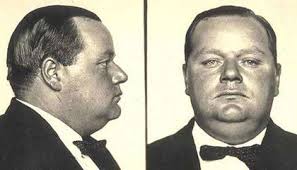
During the 20’s there were a multitude of scandals over the news media. The main news just became a place where the scandals were told left and right. One of the more famous actors that took the most heat during this time was a beloved actor named Phatty Arbuckle. Because of this scandalous period in news media time he lost everything because the certain legal trouble that he got into. Not only was he attacked for these scandals, but so were the movie themselves. Scandals like these situations are the exact reasons why Hollywood tried to keep negative news out of the media.
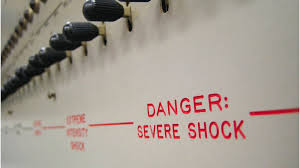
In class the other day we watched a documentary about authority. In previous classes I have watched that entire thing, and even to this day, it completely amazes me that those results came about. Why is it that people just obey authority even though deep down they know its wrong. In a real world situation like that I wouldn’t be able to continue at all knowing that someone was in pain due to my actions. I’ve always been about respect because thats how I was raised, but theirs a clear difference between respect and obedience. I was told to obey anything an officer or someone with high power has to say, but in situations like these you need to know the difference between right and wrong and go about it accordingly. If someone important keeps telling you to shock some random person just because they said so I really don’t think I would. Although I know now that the shock was fake and there really wasn’t anyone there, I feel like I’d be one of the certain people who wouldn’t comply.
The Stanford prison experiment is another example of strange obedience. At first it didn’t really startle anyone, but soon enough people began thinking this was the worst idea of they’re lives. Everyone in this experiment signed up for this “torture” and began to hate every second of it, because the people actually began to live they’re assigned roles. These people were completely convinced that they were indeed prisoners or guards of a real prison. These prisoners were humiliated by the guards, to the point they began having mental breakdowns and would lose control of themselves. The torture tactics would only increase from there, and soon enough people wanted out of the experiment. Zimbardos experiment didn’t last very long after that, but the results are clear. If people are given roles they are most likely gonna fill them to they’re perceived view of the role.
This week we viewed a very interesting documentary about the MPAA rating system of movies. To begin with I was very interested in the video because I’ve always wondered how movies were actually rated. As the documentary went on I realized the actual ratings were a bit skewed based on certain raters opinions. This documentary isn’t your ordinary documentary and that’s why I thought it was very intriguing. The producers completely put the Motion Picture Association of America on blast with this movie. They really went out of they’re way to expose the rating process of movies. They thoroughly explain why it isn’t fair that certain ratings are given to movies for certain scenes. In my mind I thought R and NC-17 movies were given their ratings based on incredible violence or minor sex scenes throughout the movie. After watching this I have realized that I was wrong, instead they are given these ratings strictly for the reason of sex scenes that the raters thought were a “bit too edgy for them.” Although certain sex scenes should be given a just rating based on the actual sex, I think they were way too invested in that and lost focus on the larger picture of the movie. These ratings would completely hurt the entire movie making process. These scenes would have to be edited in order to meet their view of an R or PG-13 movie, and their view is definitely a bit skewed. Any gay scenes in movies were instantly hit with an R rating or higher, but heterosexual content would rated much lower. This is because the raters were definitely frightened of the gay scenes and instantly slandered. The film making framework in this nation is represented by a strange board made by the significant film studios over 35 years ago. The MPAA board has worked as a sort of “black box” where the movie goes in one end and out comes a rating. Its unfair in a lot of situations because if a movie is unjustly given an NC-17 rating the picture can no longer be released. This ruins the entire movie making process. The reason behind the rating of certain sex scenes fear was that it would give the younger audience the wrong ideas and impressions. This rating is based off of what the parents would want they’re kids watching, and this is wrong. Its not just about the kids viewing the movie its about everyone else. I feel the rules of the ratings should be enhanced to focus more on actual violence rather than sex scenes.
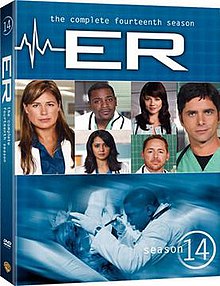
ER is one of the greatest shows of the last decade. Easily one of the greater sit-comes in recent memory, and in the the last few generations. ER has been around for a very long time, which includes 15 seasons of 331 episodes. Its outrageous to think that it has been on air for that long, although it has had great success in that time. There have been many other types of shows dealing with cops, doctors, and firemen, but none really portray a real life situation. The show can really go into any direction like a real life emergency room. Nobody’s really prepared for the antics that go on through this show, and the funny part is that it seems like the actors/characters aren’t 100% ready either. From the episode we have seen in class I was inspired to watch more, and just like that episode we saw in class it was just as crazy in other episodes. Shane and I watched a few episodes today, and its awesome to watch how crazy the show is. Also I love the fact that there are so many different actors in this show. There were a multitude of actors that I’ve seen in past shows and movies. In this scene of another episode Shane and I watched there was a crazy ambulance explosion in which injured one of their doctors in the process. the surgery to heal him seemed to help, and it looked like he was gonna be just fine, they were even joking with him about the whole procedure. Then suddenly something started growing in his neck and he went into instant surgery. In the end everything turned into a disaster and he became brain and heart dead. It was a very sad scene and his brother was there for the entire thing.
From what I’ve seen it seems like ER is an ever changing show that has a lot of rotating pieces/actors. This is great because it is a perfect type of show to be streamed. Hulu hopped on the opportunity and haven’t looked back since. ER has attracted the eyes of many viewers on its streaming service. The camera angles that also are in the show are fantastic and really convey a sense of urgency. This show has the emotional appeal to attract viewers, no wonder why 5000 viewers have already finished the series, which is wild considering how man episodes are.
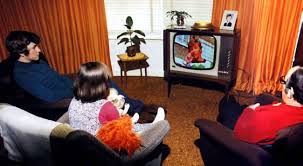
Television is a spectacular source to learn new information and teach viewers about what is going on in the world, whether it be from the news or a lesson learned from a popular show. Television educates the world with its content. Could you imagine a world without a television sitting in the living room? Believe it or not, there was once a time where nobody even knew what television was and it became a brand new, exciting technology and a foreign term that was not a household name like it is now. The world’s first television stations in America began in the late 1920s. Charles Francis Jenkins created the first station titled W3XK, airing its broadcast in 1928. The same television that was a fancy and advanced technology then turned into a critical form of communication and became widely popular among Americans- to the point where every living room included the illuminating box of light and color. Once the 1970s era rocked the United States, television stations boomed and along with that came shows such as The Brady Bunch, Happy Days, Charlie’s Angels, Little House on the Prairie, and many more that accumulated a massive audience and became extremely popular within homes. Inside all of these shows surfaced the feelings of innocence, nostalgia, and everyday life while focusing on many social issues, and family relations.
Television in the 70s was a tumultuous era that paved way for how television is seen in this day and age. Television had a profound and wide-ranging impact on American society and culture. It influenced the way that people think about such important social issues as race, gender, and class. Television helped to spread American culture around the world especially within the start up shows in the 70s. Television is a medium that improves the world, triggers imagination, raises curiosity, encourages education and gathers millions around common interests. Time and people have changed due to the impact that television has brought about.
The 70’s proved to the world that it is okay to broadcast scenes on television that portrayed real life whether they were good or bad. For example, Charlie’s Angels gave way to three powerful women, (which was big especially back then concerning women’s rights) and The Brady Bunch was a show about a family and showed how life worked within that. There were so many other shows throughout the 70s that held meaning to Americans all over. To this day, people young or old could recite staple shows from the 70s because that’s how much power they held.







 Mass Media & American Life - Fall 19