
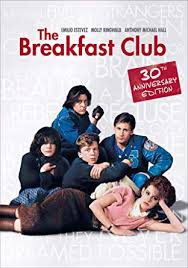
The history of filmmakers portrayed to the world, that a director can indeed be an artist. An artist is someone who practices or creates a work of art. In my opinion, certain directors are artists in their own special way. But, not all directors are artists, the auteur theory helps to convey the differences between the two. Auteur theory is the idea that the director of a film is the primary driving force behind the creation of a motion picture. In other words, the director is the author of the movie. The key differences between an ordinary director and one who uses the auteur theory is detecting the significance of the movie. Although the director is a very important role, sometimes other factors become more significant like the stars, studios, and producers. The auteur theory makes the director stand out in the film, and even become the reason why you watch the movie. A quote from the studio binder helps to convey this point when they said “People referred to a ‘Clark Gable movie’ for example, because in the 1930’s stars ruled the day. Auteur theory came in the early 1950’s, and it changed all that. It shifted some power away from actors, producers, and studio moguls while giving more power to specific types of directors. It ultimately led to a kind of director-crisis.” This director crisis directly correlates with a need for a director that has a signature stamp on how he/she creates the motion picture. The director I will be focusing on is none other than the famous John Hughes. John has been credited with the success of many films over his tenure, but the one film I will mainly be focusing on is The Breakfast Club.
John Hughes has been famously credited with the making of at least 41 films including famous titles like: Ferris Bueller’s Day Off, Sixteen Candles, each Home Alone, each Beethoven, The Breakfast Club, and multiple more highly anticipated movies. John Hughes was born in Michigan in 1950, and he was described himself as a “quiet kid who loved the Beatles.” “Aged 12, he and his family moved to the Chicago suburb North brook in Illinois. Navigating adolescence on the outskirts of a wealthy neighborhood, Hughes’ experiences at Glenbrook High School would inspire his work as a filmmaker.” (The Beginner’s Guide) After graduating high school in 1968 Hughes attended the University of Arizona, he dropped out of his junior year to pursue a career as a copywriter throughout the 70’s. This process helped kick start his film making career in 1983. John Hughes left an imprint on the directing world and was referred by Roger Elbert as “ the philosopher of adolescence”, Hughes’ work – which included eight directorial efforts and numerous screenplay credits – has influenced numerous directors, including Wes Anderson and Judd Apatow, and he endures as one of the most beloved filmmakers of the 1980’s. In John Hughes’s movies he depicts the teenage experience through his directing methods. His greatest contribution as a filmmaker, not just as a director, was the way that his films went against established stereotypes that were not exploited before. In a way, he revolutionized the movie making business by taking simple ideas and created a greater meaning that was previously overlooked. The theme that he portrays in many of his films is that teenagers go against the portrayed childish treatment, and are actually respected adults. He conveyed that growing up as a teenager is a difficult and complex journey that cannot be defined by a single element. This information proves how John Hughes is a director that uses the auteur theory, and depicts his theme into a multitude of movies.
In the movie The Breakfast Club the audience was easily able to pick up on John Hughes teenage theme. The movie begins with many close up shots of the highschool setting, and then proceeds to introduce the characters as they are being dropped off for detention. They all meet in an awkward environment, that is conveyed through full shot lenses, and are met by their detention advisor. Throughout the movie, time moves in a continuous fashion that leads to the end of the movie in chronological order. The five teenagers are trapped in detention and are all different types of people that include:” a brain, an athlete, a princess, a basket-case, and a criminal.”(The Breakfast Club Movie Review) The main plot is that the only thing they all have in common is that they did something wrong and are paying the price for it. The twist is that they actually begin to grow to like each other. Throughout the movie the performances from the actors are spectacular, which is expected with such an all-star cast of young actors. John Hughes used some of these actors on previous movies like Ringwald and Hall. This helped convey his purpose to keep similar actors he worked with. Through the thick of the plot the characters go through conflict with each other and the detention advisor. In the end they all realize they are one alike and share similar traits.

The “R” rating of this film regards the language used, but in my opinion I think it should have been a PG-13 because this film is certainly appropriate for younger teens. In the end John Hughes created and portrayed spectacular films that follow the trend of teenage adolescence. The best way to wrap this up is a quote I found that says “We accept the fact that we had to sacrifice a whole Saturday in detention for whatever it was we did wrong, but we think you’re crazy to make us write an essay telling you who we think we are. You see us as you want to see us—in the simplest terms and the most convenient definitions. But what we found out is that each one of us is a brain and an athlete, and a basket case, a princess, and a criminal.” (Don’t You Forget About How Deep)

Fraser, Lauren. “The Beginner’s Guide: John Hughes, Director.” Film Inquiry, 13 Apr. 2017, www.filminquiry.com/beginners-guide-john-hughes-director/.
“The Ultimate Guide to the Best Auteur Directors.” StudioBinder, 22 Oct. 2019, www.studiobinder.com/blog/auteur-theory/.
Ifeanyi, KC. “Don’t You Forget About How Deep ‘The Breakfast Club’ Really Is.” Fast Company, Fast Company, 29 Oct. 2018, http://www.fastcompany.com/3042477/dont-you-forget-about-how-deep-the-breakfast-club-really-is.
Ebert, Roger. “The Breakfast Club Movie Review (1985): Roger Ebert.” RogerEbert.com, Hughes, 15 Feb. 1985, http://www.rogerebert.com/reviews/the-breakfast-club-1985.
 Mass Media & American Life - Fall 19