The Overall Impact of M*A*S*H & Public Interest

As the temperatures continue to fall and Covid cases continue to rise, we find safety and security within our homes or dorms. We are continuing our resiliency and able to enjoy the fourth week of Broadcast, Advertise and Audiences through our weekly Zoom discussion.The Public Service Announcements (PSA) were thoroughly presented and demonstrated our cohesiveness as a group. My group (Group 2) represented the Department of Natural Resources in a clever, commercial manner. Every group displayed their individual intelligence in a creative manner.

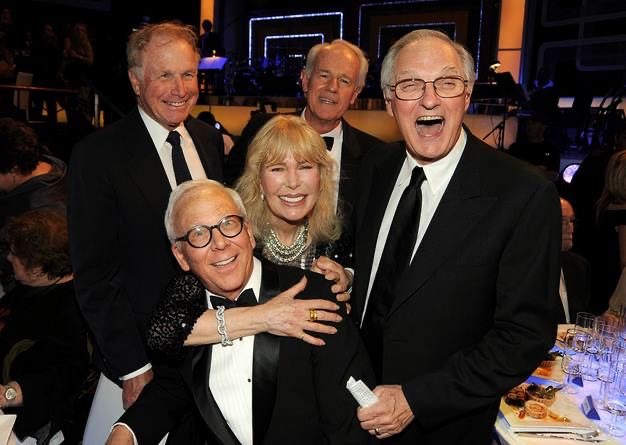
We were introduced to M*A*S*H – 30th Reunion Special, M.A.S.H. Remains One of the Most Influential Sitcoms of All Time and chapter 3 of Television and American Culture. M*A*S*H was a beautiful and iconic sitcom that resonated deeply with our nation. The television series followed the 4077th Mobile Army Surgical Hospital, a team of doctors stationed in South Korea during the Korean War. The 20th century Fox production illuminated controversial hardships surrounding the Vietnam War. The 2002 production celebrated the 30th anniversary of the M*A*S*H series. The documentary featured interviews with writers, producers and past cast members.
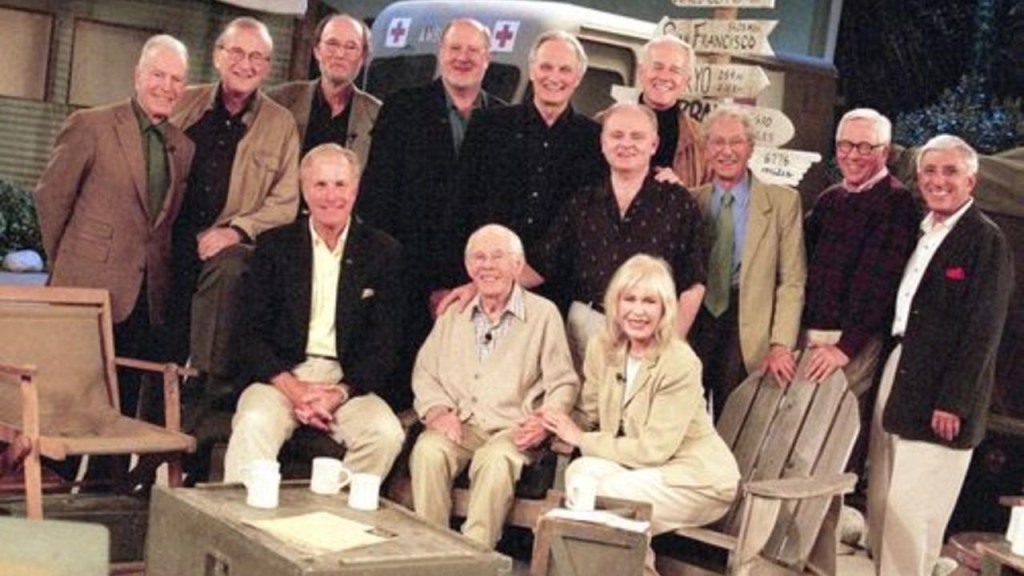
The cast of M*A*S*H

The creation of M*A*S*H used humor to escape the depression and horrors of the Vietnam war. The series highlighted social issues and delivered gut wrenching truths surrounding the Vietnam war. The country was unsettled and struggled to act accordingly. M*A*S*H was able to incorporate that frustration and display it for the entire world. Their ratings after the first year were extremely low, but would begin to climb the ladder of CBS and flourish after a couple seasons. The producers of M*A*S*H realized the power and stories they could depict to the American public. The sitcom was relatable to audiences and developed a unique relationship for over a decade. The final episode was unprecedented and an audience of 23 million people tuned in to watch the show air. It was difficult for the producers to understand the size of the emotional response that the series had created. Although I viewed the re-runs long after the finale and at a fairly young age, I still valued its presence. I feel shows such as Jeopardy and M*A*S*H were at the cornerstones of my child, and I will never forget that time spent with my family. I hope television can return to a time and place where quality comes before quantity. M*A*S*H was a remarkable series that touched the hearts of millions. The show and cast will be missed, but never forgotten.
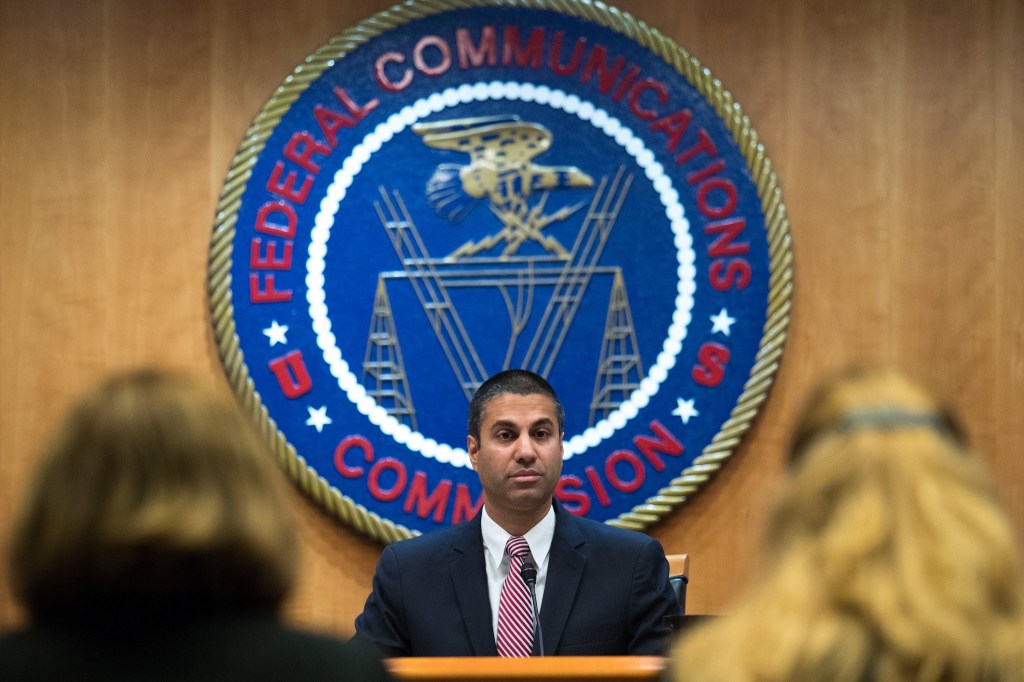
Chapter 3 of Television and American Culture dives into the importance of Public Interest. The Federal Communication Commission (FCC) is the chief regulator and overseer of the framework of television. An excerpt from the textbook stated “The core responsibility of the FCC is to issue broadcast licenses to radio and television stations, providing them exclusive rights to use the public airwaves…”(Page 101). The FCC is concerned with the ownership of these airwaves and the power they hold over an audience. The structure and system of broadcasting may be complex, but is invaluable to the regulation and production of this industry.
Published by: Samuel Erickson

U & G Theory and Galaxy Quest

This week we started class with a discussion of the uses and gratification theory. The uses & gratification theory is an approach to understanding why and how people actively seek out specific media to satisfy their specific needs. People use music, books, film and television to fulfil their cognitive and affective needs. People use media to increase the self-esteem and to measure their status in society. Certain individuals also seek out social integrative needs to receive validation and credibility. These individuals socialize with family and friends to develop or retain relations in society. They view similar forms of media and find commonalities within that media. This helps these individuals create relationships with others that share the same interests, likes and dislikes. Others however, use media as a means of escapism and to relieve tension. The twenty-first century has many different forms of media allowing certain individuals to be alone or as a way of coping with loneliness.

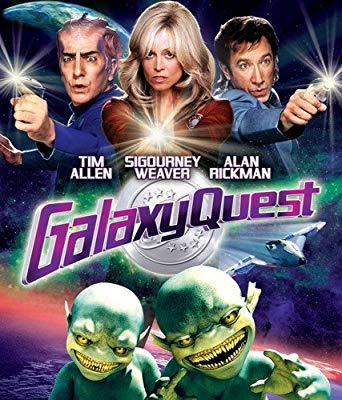
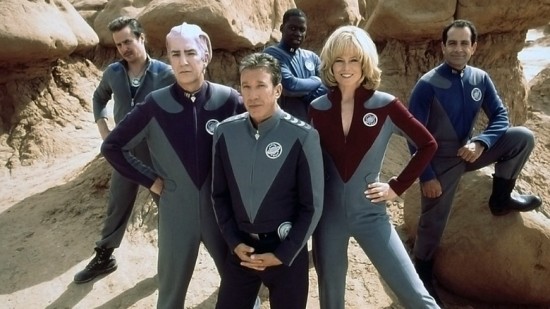
In class on Wednesday we finished viewing the film Galaxy Quest. Galaxy Quest is a 1999 American science-fiction comedy directed by Dean Parisot. The movie is a parody of the Star Trek series and all the fandom it attained throughout the years. The parody stars Tim Allen as Jason Nesmith, who played Commander Peter Quincy Taggart, the commander of the NSEA Protector and main character of the series. The film also co-starred Alan Rickman, Sigourney Weaver, Tony Shalhoub, Sam Rockwell and Daryl Mitchell.

The cast of Galaxy Quest

Galaxy Quest begins with the crew of the canceled space-adventure television show at a fan convention receiving introductions and signing autographs. Jason Nesmith embraces and loves the attention he receives from his fans; while his supporting cast resents and despises him for “soaking up” all the glory. The plot of this science-fiction parody shifts towards a group of people called Thermians. The Thermians are represented by Mathesar and approach Nesmith with an issue of life or death. A group of Aliens threaten the remaining Thermians and they request help from “Commander Taggart” to save their race. Nesmith thinks this is all an act and agrees to help the Thermians with their problem. The following morning he is transported to the Protector (Thermian spaceship) and addresses the leader of the hostile aliens, Sarris. Nesmith, still unaware of the danger at hand, orders Mathesar to fire on Sarris’s ship and then requests to return home to sleep off his hangover. At this time, he is shot into outer space back to his home in a matter of seconds. Nesmith now realizes the situation at hand and rallies his crew to return to the Protector. Sarris’s ship and crew still remain and have an epic showdown against the Galaxy Quest crew and Thermians. The film ends with the destruction of Sarris’s ship and crash landing of an escape pod into a convention. Sarris’s finally attempt to kill the pestie humans is foiled by Nesmith with a swift laser beam to the chest. This all unfolds in front of the Galaxy Quest fans and the crew receives a standing ovation as they bow on stage. This film encapsulates comedy, action and heartfelt moments throughout the movie. It is a well rounded movie and is great for the whole family.

Written by – Samuel Erickson

The Newsroom and The 6 Major Conglomerates

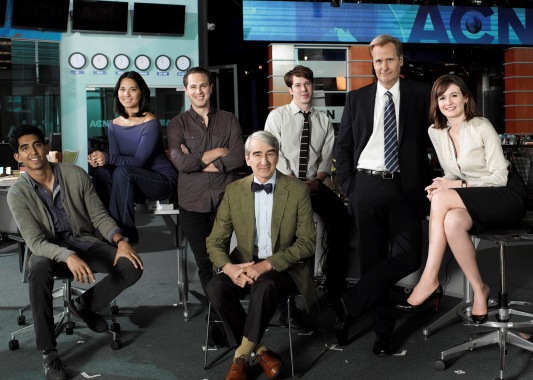
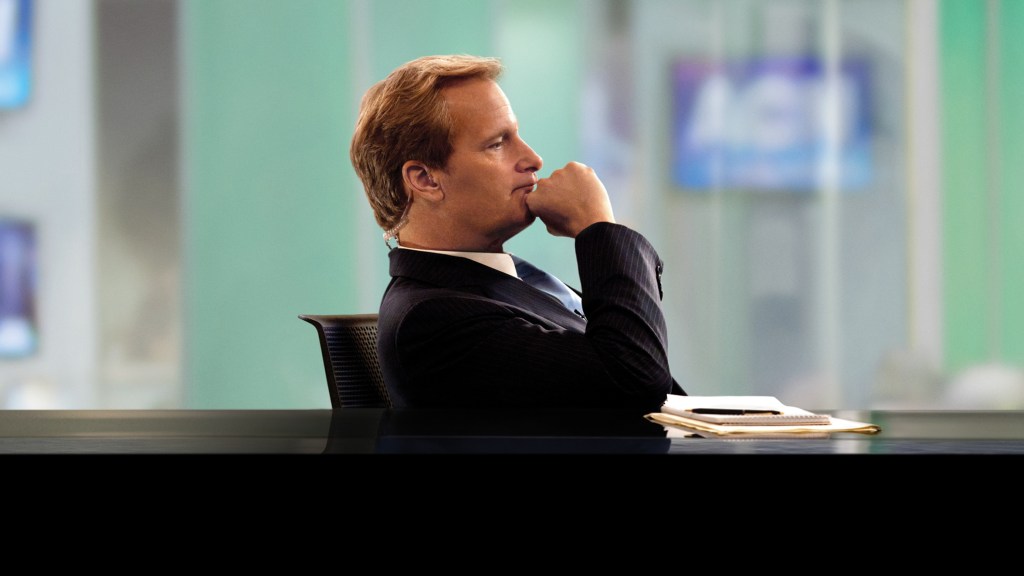
This week in class we viewed two episodes of The Newsroom, written by Aron Sorkin. The American television drama series premiered on HBO in 2012 for three seasons. The Newsroom stared well-known actor Jeff Daniels as Will McAvoy. Jeff Daniels won an Emmy award for this portrayal of a popular news anchor struggling to find the balance between ratings and delivering real news. Other actors and actresses featured in the show are Emily Mortimer, John Gallagher Jr., Alison Pill, Thomas Sadoski, Dev Patel, Olivia Munn and Sam Waterston.

Cast of the TV drama The Newsroom

The Newsroom shows behind-the-scenes events that transpire at the Atlantis Cable News (ACN) station. The series kicks off with Will McAvoy exploding during a debate after being asked, “What makes America the greatest country in the world?”. He flips the script and goes on the offensive to explain the flaws that lie within the United States government and that we are no longer the greatest country in the world. Charlie Skinner (Sam Waterston) the director of ACN, hires a new executive producer without informing Will McAvoy. The new E.P. happens to be Will’s ex, Mackenzie, who he has not seen or spoken to in three years. The two hashed out their differences and the episode then turns to the Deepwater Horizon oil spill in the Gulf of Mexico. The news team throws the previous stories out and run the oil spill piece completely off script. They successfully deliver the coverage and facts of the spill in exciting fashion. The first episode ends dramatically with Will and Mackenzie sharing a moment from their first date. This leaves the audience craving more outlandish states, romance and wondering what direction the Atlantis Cable News will take next.

Jeff Daniels stars as Will McAvoy in The Newsroom

Another topic of discussion in class on Wednesday was the major conglomerates that control almost all aspects of television, news and film in American life. The six major conglomerates are GE, News-Corp, Disney, Viacom, Time Warner and CBS. Notable properties of these organizations are Universal Pictures and NBC (GE), the New York Post and the Wall Street Journal (News-Corp), ESPN and Marvel Studios (Disney), MTV and Paramount Pictures (Time Warner), and Jeopardy and 60 minutes on CBS. These massive industry giants control 70% of your cable television and had a total revenue of 275.9 billion dollars in 2010. The profit the big six corporations have increased in millions if not billions of dollars in 2019. The six major conglomerates only do not control about 10% of the media in American life.

Publisher – Samuel Erickson

Comprehension of media with Professor Schlegel

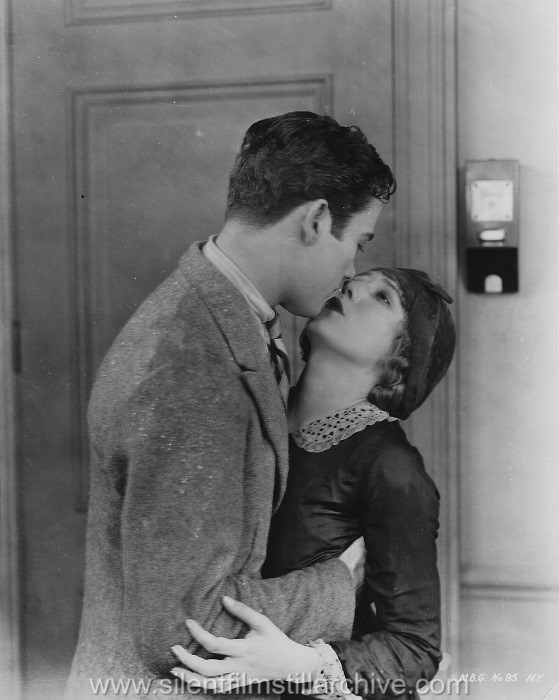
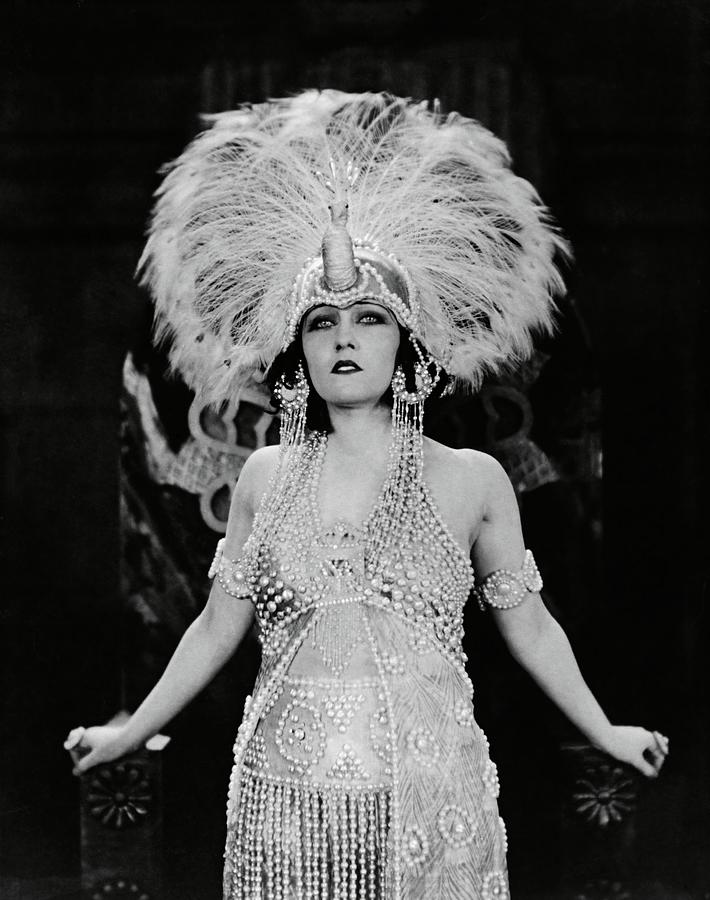
The film we first viewed on Monday was called Why Be Good? The short film illustrated the struggle of sexuality and security in early cinema. Movies of the 1920s were raw, uncensored and depicted the radical change of culture in the United States, particularly in Hollywood. Early films showed drama, sex and scandal at a time where there was little to none censorship or coverage on the production of films. Actresses that had a major impact and influence on this era were Mary Pickford and Glory Swanson. Mary Pickford performed in films such as My Best Girl, Coquette, Sparrows and Little Annie Rooney. Mary’s characters were extremely attractive, warmhearted, generous, funny but were also independent and fiery-tempered. Glory Swanson starred in movies such as Sadie Thompson, Male and Female, Why Change Your Wife and Beyond the Rocks. She was full of energy, always on the go, fidgety, and hyperactive. She had great ability to put thoughts into action, and there is no hesitation once she set her mind on something. This era of film was the building blocks of what was accepted, appropriate and allowed in future years of film and cinema. Within twenty years the population of Hollywood grew eight times its original size.

Mary Pickford in the film My Best Girl (1927)
Gloria Swanson staring in the 1919 film Male and Female

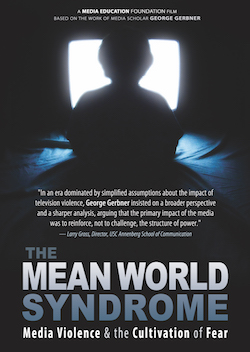
The second piece of film we watched and observed this week was a short documentary called Mean World Syndrome. Media today is engulfed in depicting violence and destruction in everyday-life. The documentary highlighted the effects of heavy users of television and the Cultivation Theory. The large consumption of television can lead consumers to view the world as more dangerous, mean and violent than the world around them actually is. This viewing of violence may create fear and paranoia where there is little threat or actually harm. The theory is not based on race, age, gender, religion, marital status, sexual orientation or economic status. Other theories believe mass consumption of violence can make or influence individuals to become more violent. This is quite the contrary however, the more television consumers view the less likely they are to act out of the ordinary and put themselves in harms way.

The last piece of film we viewed on Thursday was called The Big Picture with Avi Lewis. This show portrayed ordinary people creating heinous and unthinkable crimes. An example of this is when four fraternity brothers killed a young man and never called for help. The initiations to join their frat started out as simple acts of embarrassment but lead to serious consequences. The fraternity brothers made the young man drink an excessive amount of water followed by exercises such as pushups. The over consumption of water mixed with the strain of exercise on the body lead to severe kidney failure. When the man collapsed on the floor the brothers simply dismissed the fact and said he was “sleeping”. This of course was not the case and the male ended up dying several hours later. The four brothers pleaded guilty and will have to live with their cowardice decision for the rest of their lives. The show also discussed human behavior experiments and peoples blind obedience to authority. Several years ago at a McDonalds, a man impersonating as a police officer called the fast food restaurant explaining there was a complaint of theft and drugs. The manager ended up strip searching the employee in question and had her perform several ridiculous tasks. The man spoke with such confidence that the manager never questioned his authority. After a few hours, without the arrival of the police, the manager realized her mistake but the damage had already been done. The suspect impersonating the officer had pulled similar pranks on multiple restaurants and was never apprehended.

Avi Lewis

By – Samuel Erickson

Classic Hollywood and The MPAA

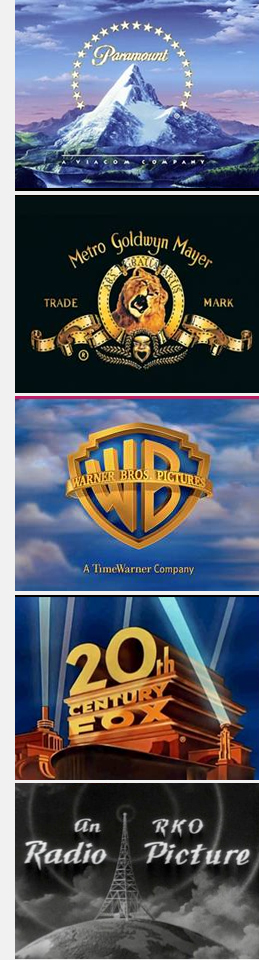
Hollywood in the 1920’s was controlled and run by five major and three major minor production studios. Metro-Goldwyn-Mayer Studios also known as MGM, Paramount Picture Corporation, Warner Brothers Entertainment, Twentieth Century Fox Film Corporation and RKO Radio Pictures were the five major studios. The three major minor studios were Universal Studios Hollywood, Columbia Pictures Industries and United Artists Corporation. The five major companies focused primarily on the production and distribution of feature films while the three minor companies produced B films or B movies. B films were low-budget films that were produced slowly and had little resources and usually unknown actors. The five major companies were vertically integrated and controlled all means of production, distribution and viewing of their product.This allowed the large major companies to control all activities in house and to not rely on any factors coming from outside sources. Major studios also controlled the majority of theaters preventing the major minor companies of showing their production with the consent of the major companies.

The Major 5
Boris Karloff starred in The Monster of Frankenstein in 1920.

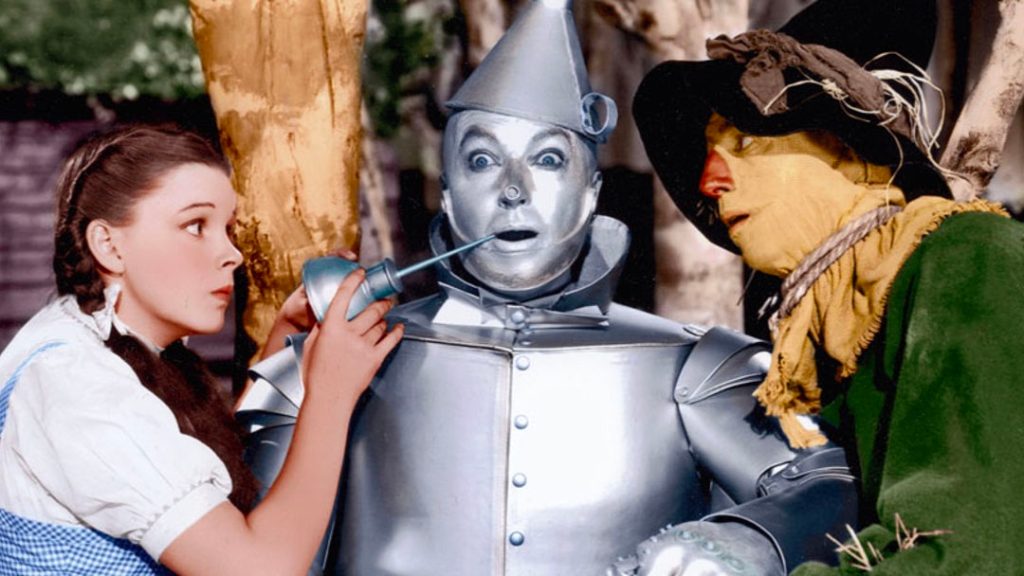
One of the first viewings we watched in class this week was from a documentary called When The Lion Roars. When The Lion Roars presents the rise and fall of Metro-Goldwyn-Mayer. MGM was founded in 1924 by Louis B. Mayer and had one of the world’s oldest film studios. MGM productions were mostly known for their glitz or glamor and epic or awing movie scenes. Several of their films were extremely successful and became huge sources of revenue. The company produced movies such as The Wizard of Oz, The Grand Hotel, Camille, and James Bond series. Many of these productions took on a life on their own and are still watched to this very date.

A classic moment of Dorthy, the Tin Man, and the Scarecrow in The Wizard Of Oz
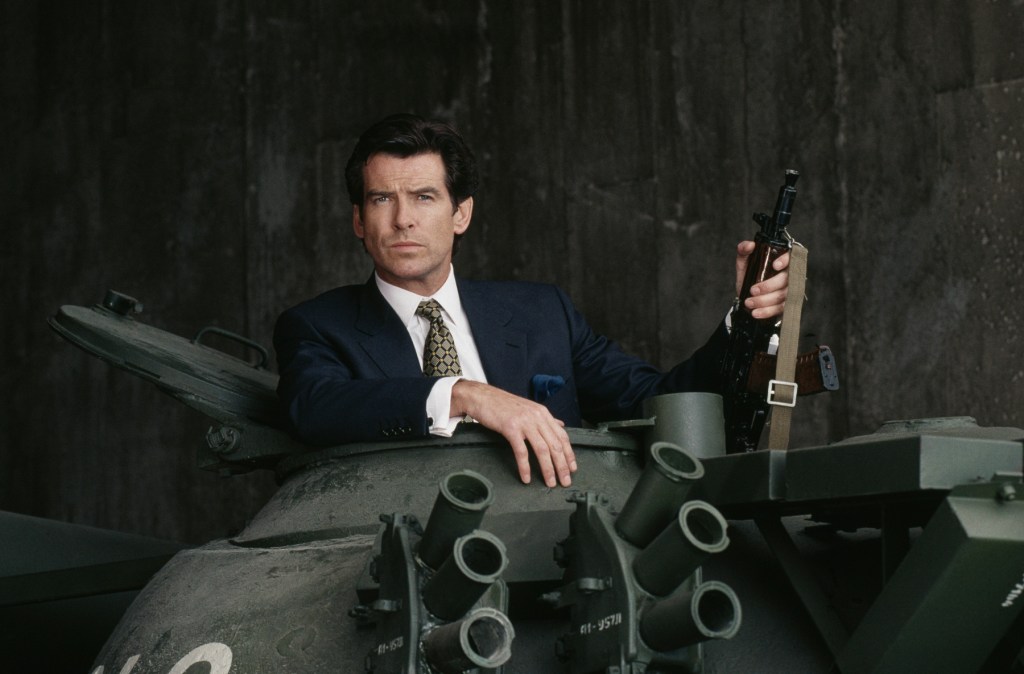
Irish actor Pierce Brosnan poses in the hatch of a Russian T55 Main Battle Tank holding a Kalashnikov automatic rifle, in the James Bond film GoldenEye, 1995.

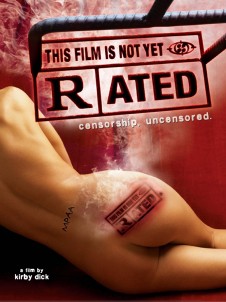
The last screening I saw this week was This Film is Not Yet Rated. This documentary is an American film about the Motion Picture Association of America’s rating system and the effect on American Culture. The MPAA critics are completely confidential and are believed to be made up average American parents that are “not gods but not fools”. The MPAA has received harsh criticism for giving certain films a “NC-17” rating while letting other similar films be shown without question. This means a movie or film rating indicating that the movie contains adult content and should not be seen by people under the age of 17. We don’t witness the entire investigation, however we view long enough to understand the confusion of some film producers and the shadiness of the MPAA. Several of the MPAA’s tactics are intended to silence employees and any specific feedback on a “NC-17” decision or rating. The MPAA may need to become more open with it’s investigations and more clear with their direction and involvement of their system.

Brand or label of the MPAA
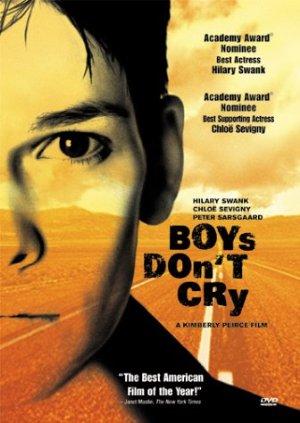
Boys Don’t Cry is one of many movies that initially received an “NC-17” rating

-Samuel Erickson

Funny Ladies, Horror Hosts, & The 80s

Written by : Samuel Erickson

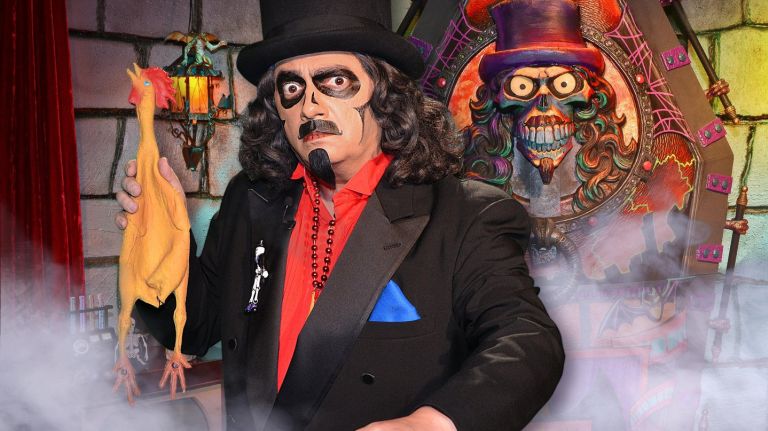
This week in class we continued the discussion and viewing of television. We kicked Monday off by watching Pioneers of Television: Funny Ladies & American Scary. The Pioneers of Television video established the growth of women in the television industry from the early 1950s to the mid 1970s. This short documentary introduced me to the fabulous careers of Betty White, Lucille Ball, Joan Rivers, Carol Burnett, and Mary Tyler Moore. Most of these women faced severe scrutiny and hardships on their journeys to fame. Lucille Ball was one of the first women that gained stardom at a time where women were “not allowed” to be funny and beautiful. Women were expected to dress and act in a manner in which was funny and laughable without being attractive. However, Lucille would have none of it. She was portrayed as a hilarious, beautiful, relatable, and likeable actress in whatever skit or scene she was involved with. She paved the way and set a standard for female actresses to follow. These women were at the forefront of comedy and pushed the boundaries previously surrounding female comedians. The other short documentary we partially watched during class was American Scary. American Scary highlighted “horror hosts” venturing into the darkness with audiences while broadcasting horror films on TV. Popular hosts know as Vampira, Dr. Creep, Elvira and Sir Graves Ghastly comforted viewers and made the lower budget films more entertaining. They applied themselves fully, discussing material from the film and visually looking scary. Horror hosts aren’t as mainstream as they once were, but Svengoolie has created a career out of it. For about 40 years he has made audiences laugh and fear Saturday nights. His unique approach of old horror films and humor continues to be a success to this very day.

Lucille Ball
Carol Burnett
Svengoolie

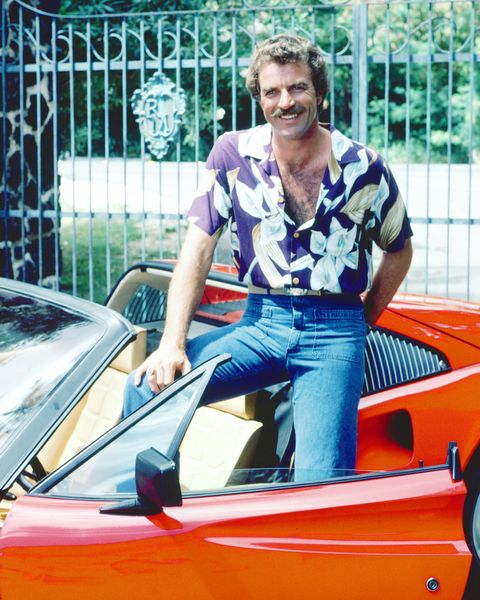
The 80s was also and important time in television. NBC, ABC, and CBS dominated the industry and controlled most of the shows broadcasted. Popular shows such as Cheers, A-Team, Knight Rider, Hill Street Blues, Magnum P.I. and The Golden Girls captured audiences with this new style of drama. The TV show Hill Street Blues revealed the realistic hardships and lifestyles of police officers. It did away with the typical “cop and robber” scene and tackled more sensitive topics. The show became a huge success with 21 nominations and 8 Emmy’s. Actors such as Tom Selleck and David Hasselhoff lauched their careers and became stars from Selleck’s role in Magnum P.I. and Hasselhoff’s in Knight Rider. The last piece of film we watched in class was an episode of er called “Exodus”. Er follows the events that transpire in an emergency room at any given moment. Throughout the episode mayhem breaks out in the hospital. A deadly toxin is brought in on one of the patients and the hospital needs to be evacuated. The doctors and nurses are able to save everyone but an elderly lady with severe complications. The show can be best described as “organized ciaos”, that keeps its viewers on the edge of their seats. There is hardly a dull moment in er and I would imagine each episode is as entertaining and exhilarating as the last.

Tom Selleck in Magnum P.I.
Original er cast

The Rise of Television

In 1927, a wooden box with a black and white screen gave birth to the television. The first picture and sound amazed audiences and advanced us into a new age. Television is a unique creative art form and a delivering device for consumerism. Prior to the radio and before other advancements in technology, TV was one of the main influences on the American public. Americans tuned in daily to television to receive important updates and information from news broadcasts. The news topics could vary from local to national headlines and change by the day. In the 1970’s, television was at a turning point. Hit shows such as M*A*S*H, Happy Days, Charlie’s Angels,The Jeffersons and many more shows alike would captured massive audiences. These shows would relate and reflect important political stances or social issues in the 70’s. The shows inspired people and also informed certain individuals on perspectives they were unaware too.

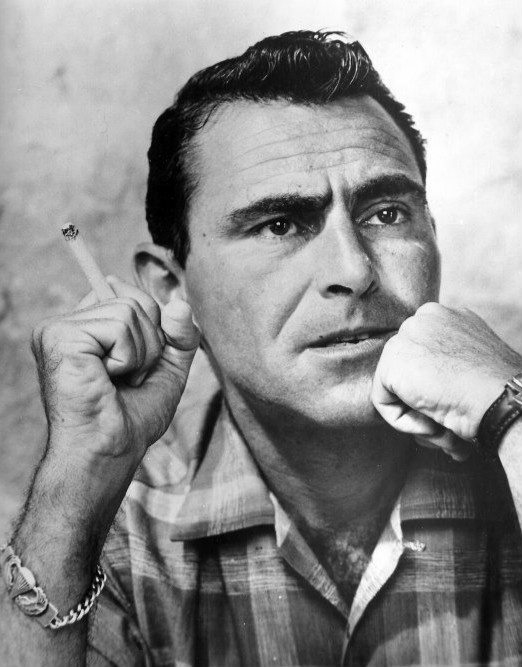
Throughout this week, we also discussed and observed the career of Rod Serling. Rod was born on December 25,1924 in Syracuse New York. As a young man, Serling served in the United States Army and fought in World War II. After his service, Rod was attracted to the elements of writing live television scripts. Rod was a screenwriter, television producer, and narrator. He loved the idea of creating characters and giving them certain attributes depending on the story line. I believe two of his greatest accomplishments were Playhouse 90 and The Twilight Zone. Playhouse 90 was a television drama series that aired on CBS from 1956 to 1961. One of the most popular episodes that every aired was Requiem for a Heavyweight. The TV drama encapsulate the fall of a professional boxer and his journey after fighting. The boxer played by Anthony Quinn, struggles to adjust to life after boxing and feels lost and betrayed by the real world. The only man that sticks by his side through thick and thin is his trainer Mickey Rooney. Mickey guides the boxer threw his new life and helps him adjust accordingly. Serling’s other successful television series was The Twilight Zone. The Twilight Zone aired from 1959 to 1964 and shocked the world for 5 seasons. The episodes had a strange mixture of horror, science-fiction, drama, realism, and superstition. The first episode aired was called “Where Is Everybody?”. The episode started Earl Holliman, who was stranded and isolated in a town all by himself. There is evidence that shows people were recently there but he can’t find anyone. He starts to panic and lose his mind in a way. In the end, the audience finds out it is a governmental space program testing the effects of isolation on the mind in space. This ending shocked viewers and opened a whole new era of entertainment to Serling. Rod Serling was a fantastic writer of his time but was extremely self-conscious. Towards the end of his life, he found that his actually work did not amount to much and was too hard on himself. In my opinion, Serling was an extremely gifted writer and had an amazing natural talent in this field. He died of a heart attack on June 28, 1975. Serling left this world too young, but his incredible work within television will never be forgotten.