The Newsroom and its relation to the public

In class this week we focused primarily on the television show the Newsroom. Although I have never seen the show prior to class, I found it to be very interesting and informative. The show relayed issues with modern day news that isn’t always necessarily seen by the public. A major issue that the show faced was whether it should relay real modern-day issues or if it should just be for pure entertainment. Many people in the show had different opinions on what to broadcast to the public and they would often times clash heads on these issues. 
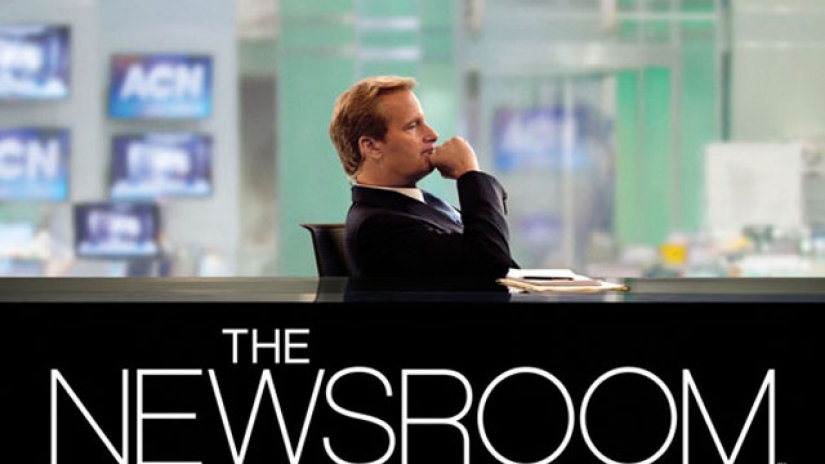
The first episode of the Newsroom that we watched in class was the pilot of the show, called “ We Just Decided To”. Will McAvoy, the main news anchor at Atlantis Cable News is just coming back from vacation, after a very embarrassing public accident. McAvoy is surprised to find out that almost all of the people who work under him are leaving him to go work for a different news anchor. His boss also hired his ex-girlfriend Mackenzie MacHale as his executive producer. This makes McAvoy very upset, but his boss insists that MacHale will be of much help to Will. A major issue that many news channels face is figuring out what issues are worth pursuing. A news alert comes through the station about an explosion in the Gulf of Mexico, many of the people working for Will see it as something that is not important and tell him that it won’t get a lot of views. As the team does more research, they come to find out that it is an oil spill that had been yet to be plugged. McAvoy and his team pursue the issue and are the only ones to do a show on the oil spill that night. Other news stations had not yet realized the severity of the issue and it was very beneficial that McAvoy displayed this news. The first episode did a good job at displaying an issue that a news station can often have, which is deciding what news to broadcast and whether it will be beneficial to the public. 

While watching another episode of the Newsroom in class, we saw an ongoing issue that newsrooms face. This issue deciding to broadcast what the public wants to hear for entertainment or relaying actual news. McAvoys show took a major hit after not covering the Casey Anthony trial. McAvoys and his team’s philosophy is to cover real news that is actually important to the public. After losing nearly half of their viewers, they decide that it is time to make a change. The team wants to stay on top of other news channels and reports about the Casey Anthony case in hopes to earn back their viewers. This episode showed that sometimes the news isn’t necessarily showing you the most important information, but it is showing you what the public wants to hear about. 

Social Science and its Effect on Human Behavior

There are many elements to human behavior and how it can be altered and effected. Media and the news can have a major effect on human behavior and the way that people act. This has been a topic of interest dating back to as early as 1920. The Payne Fund Studies, in the 1920s and 1930s were conducted to determine the effects of movies on children and adolescents. The studies have been criticized for lacking scientific explanation, but they were the first attempt to study the media.

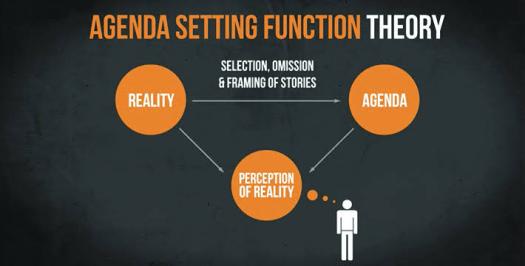
 While in class this week, we discussed the Agenda Setting Theory. The Agenda Setting Theory focuses on the relationship between what we think and how mass media portrays information to us. Ultimately, the news will concentrate on certain issues which leads the public to think that these issues are more important than others. The press does not always reflect reality, and they also filter it to make us believe certain things. This theory is so important because, it shows that the publics thoughts can be altered to believe what the news wants it to believe. 

The Agenda Setting Theory is not the only way that our thoughts can be altered by another person. Another example of how human behavior can be affected is its compliance to authority. There have been multiple experiments done to show that people comply to authority quite easily. Two that we learned about in class this week are the Milgrim shock experiment and the Stanford prison experiment. The Milgrim Shock Experiment was conducted by Yale University and psychologist Stanley Milgrim in 1961. The experiment would measure how people would obey to authority. Participants in the experiment were told that they were helping with an experiment, their job was to administer electric shocks to a “learner” in a different room. The participants were accompanied by the experimenter who acted as an authoritative figure. The electric shocks were fake, and the entire experiment was staged but the participants had no clue. Unbelievably, many of the participants obeyed the instructions and complied to authority. Many of these participants administered shocks that would have been fatal if the experiment they were helping with was real. 65 percent of the participants in the experiment administered the final shock, which was 450 volts, due to an authoritative figure telling them that they had to continue.  Another experiment that would show how people obey authority was the Stanford Prison Experiment. This experiment was done in 1971 and conducted by a research group led by psychology professor, Philip Zimbardo. In the study volunteers were assigned to be guards or prisoners in a mock prison. The experiment was supposed to last two weeks but ended after 6 days due to the assigned guards acting in authoritative ways towards the prisoners. The study was done to investigate the effects of perceived power on an individual. Both experiments discussed in class showed the power of authority and how human beings comply to it. 

Advancements in Motion Pictures

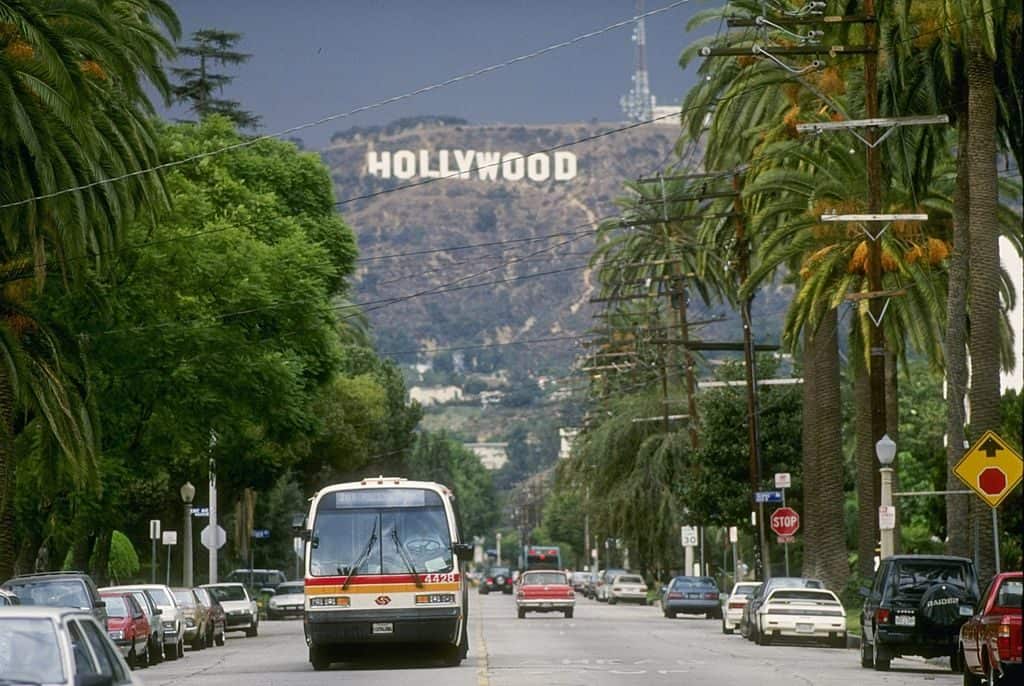
Motion pictures have been a very important part of people’s lives for many centuries. Dating back to the early 1900’s, motion pictures have evolved into a form of enjoyment for many families and individuals across the globe. Thomas Edison ultimately began the production of motion pictures in 1888. Edison and his assistant William Dickson created the first device that could record moving pictures. These motion pictures were only a few seconds long and did not contain sound. After Edison’s invention, the film and motion pictures industry took off. Fast forward some years, the motion pictures industry was booming in Hollywood. Hollywood was an ideal location for the industry due to land being sold for so cheap. Most of the people moving to Hollywood that were part of the industry were looking to get away from their parent companies and make a name for themselves. During this time, there were five major studios producing movies, known as the “Big Five”. These companies were succeeding due to the way that they ran their business. They produced, directed and premiered their movies on their own. Not having to rely on another company to help with a movie made them extremely successful. Hollywood became home to the industry and flourished while the motion pictures industry would continue to grow. 

            While the industry was growing, there were some setbacks that studios had to face. The most major issue that they faced was the supreme courts Paramount Decree. This was a nationwide issue in 1948. The “Big Five” companies were seen as a monopoly and the supreme court passed an antitrust act to decrease their power. This was done in order to help smaller, newer studios. Another issue they faced was the continuing growth of television. Watching television became more of a popular past time for Americans, rather than going to the movie theater. With these setbacks, studios had to work harder to survive and make a profit. 

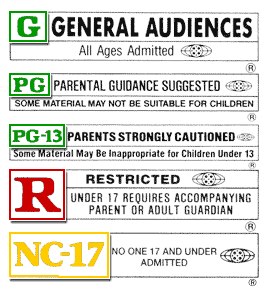
            The film we watched in class called “This Film is Not Yet Rated” made me see how much actually goes into the rating of a movie. The MPAA works to rate each movie that is produced. I found it very interesting to see that the MPAA is so secretive and tries very hard to not reveal their identity. In the movie, the undercover investigators work very hard to figure out who is a part of the MPAA. It was surprising to see that the members were all very different and came from different backgrounds. Another part I found interesting was how many movies are rated as NC-17. The movies that were rated NC-17 were primarily for sex scenes instead of violence which really surprised me. I wouldn’t say that the MPAA is necessarily fair because it is made of a group of individuals that don’t represent the country as a whole. The MPAA seemed pretty stuck in their ways and that they were not extremely willing to change their mind once a decision was made.