Galaxy Quest, U and G Theory

This week in Mass Media, we discussed the U and G theory, or the Uses and Gratification theory. This theory is an approach to understand the reasons of how people seek out specific media for their consumption, satisfaction of their needs and why they do it. So basically, it is how we as people control media to our own advantage so we can integrate it into our everyday lives. We have all had a part in this one way or another. We come home from class or work and the house is empty, nothing going on. No noise, no people. Turn on the tv just because we need that extra background noise just to keep a ‘sane’ feeling. With that ‘sane’ feeling, we as consumers are satisfied with what’s happening. We all go through stressful days in some way. Hard days at school, work or just a hard day in general. So, we do the little things that will take away that feeling. Most people I know, as well as myself, binge watch certain tv shows whether we have seen it a million times or not at all. Consumers find the little things to achieve that satisfied feeling.

One of the examples that satisfies this theory was a movie we watched in class called, Galaxy Quest. If you have ever seen Star Trek or anything close to it, this movie falls into the same category, with a little bit of a twist. For starters, it is like a movie inside of movie since the actors in the movie are all actors on the show, Galaxy Quest, which is the tv series depicted in the movie. What starts as actors not enjoying the television series and getting sick of it, ultimately brings them to the real-life version of the show. As well, fans become part of the reality too.
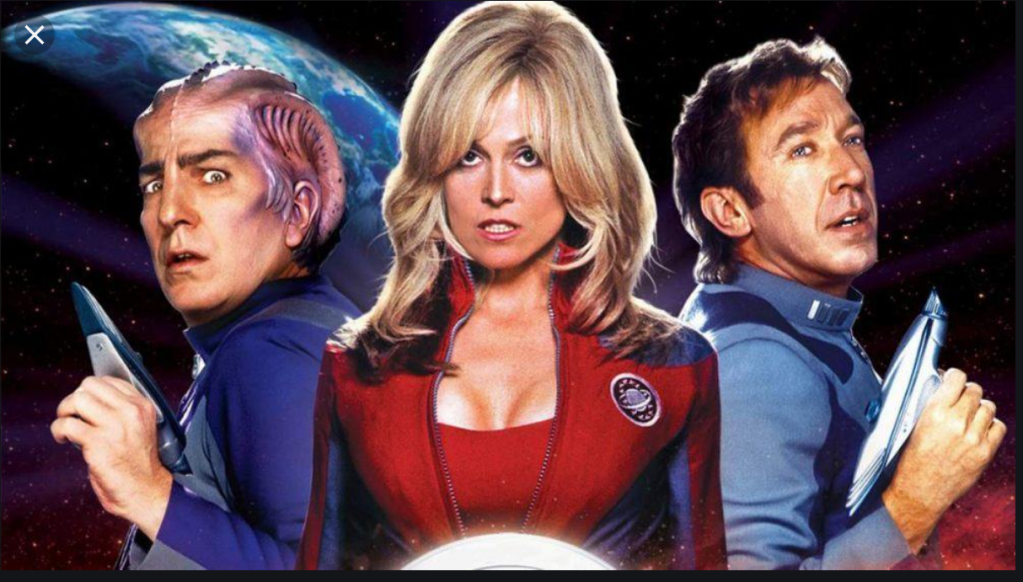
Most fans and consumers who watch television shows, understand that it is show based on fiction of the universe. However, there are fans that search for the reality of the show on their own. In the movie, there were ‘superfans’ who basically study the show in their free time along with watching it. Why do they do that? Simply, for satisfaction as mentioned before. When the actors get caught in a bad situation when things get taken more serious outside of their show, they call upon the superfans, who pay attention to a little more detail than the actors themselves. With their knowledge, they can get the actors out of their problem to find success. Consumers focus strictly on their own satisfaction, for their gratification needs. Whether you’re a superfan or a casual binge-watcher, we all search for specific satisfaction through specific uses.

Jason Berardicurti
Society is what it is

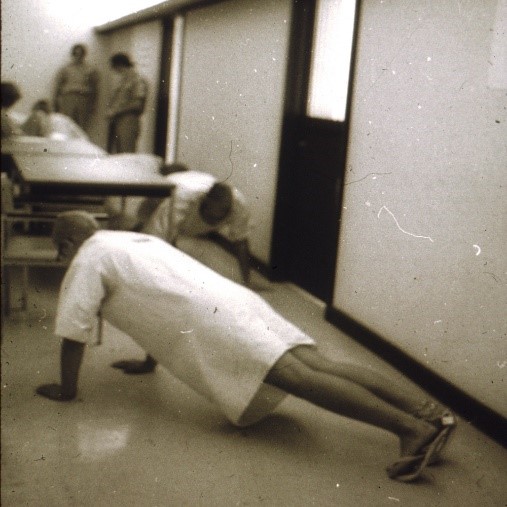
Society for the most part makes decisions based however the media depicts it. That’s what we discussed in class. People have a hard time differencing what they see in a movie or on the news for how things go about in real life. We watched a documentary in class about how power can be used for good, but ultimately for manipulation and self-use as well. The Stanford Prison Experiment was a social psychology experiment conducted back in 1971, to see psychological effects of perceived power.  The experiment was conducted between people playing roles as prison guards and prisoners. At first, the experiment didn’t really seem to startle anyone. The guards tried to get into character by trying to mess with the prisoners but most of the prisoners took it as a joke right away. However, as days went on, the prison guards found their roll and started to get inside the prisoners’ heads. Torture tactics started to increase, and prisoners started to feel like they didn’t want to be their anymore. Prisoners started asking if they could get out of the experiment, but it seemed as though the more power the guards gained, the more intense and real the experiment was. We can’t really say if its good or bad.

See the source image

Another thing is how news is reported and depicted. There are cases of people who watch tv that have violence or experience any violence on media are more subject to violence going forward, however there is no real case for it. People have different viewpoints towards certain issues along with different ways that their mind processes events. We watched a Jon Stewart talk show clip in our last class and the news anchor and reporter went from talking about government surveillance and spying to a breaking news case regarding popular singer, Justin Bieber. You would think the government surveillance topic would get more attention, but Hollywood has a large impact on media consumers. Most people I bet didn’t even blink an eye when the breaking news came on because it was more interesting already to them than the government topic. Why is that?

Hollywood has a crazy impact on society between shows, movies, celebrities and more. There is so much media that one cannot focus on everything on the media, but still have focus over certain aspects which still gives Hollywood an upper hand. Scandals drive up the ratings for sure. When the news of a celebrity doing something wrong breaks the Internet, everyone is invested because one way or another they feel a connection towards them. That’s why catching scandals is so good for the news because this one big topic will drive in viewers.

Jason Berardicurti

MPAA – Solution or Problem?

This week was very interesting as we talked different movies as well as how they are rated. The Motion Picture Association of America is not what we all thought it was. The way films are rated, who they choose to rate them is all kept secret. Kirby Dick who is an Academy Award-nominated director decided he wants to find answers to how these people go through the process of rating films. Usually for inappropriate movies that involve sexual acts, cursing and more, you would think that the movie would instantly be rated ‘R’. However, The MPAA has another classification of ratings called ‘NC-17’. Basically, it just means anybody under the age of 17 is prohibited to see the movie. Yet, how do movies that have just been filmed get graded? What criteria makes them ‘R’, ‘NC-17’, PG-13 and more? Kirby Dick tried getting answers by hiring a private investigator to stake out the MPAA building headquarters. He wants to know the truth about how the MPAA has so much underlying power. He also interviews other directors who have been affected by the judgements of the MPAA’s ratings. Directors such as Kevin Smith, Mary Harron, John Waters and others shared the complaints with the unfair system that continues.   

See the source image

One answer that was found was how the MPAA selects participants to volunteer and rate the newly-produced movies. You would think all participants would share similarities, such as having kids among a certain age, married, income and more. In a way, like a focus group would. However, the private investigator in the film found out that some of the people volunteering had kids, while others did not. Lots of raters selected never really had training in this either. They don’t know what classifies as ‘R’ or ‘NC-17’. How is that fair to people? The answer is that it simply isn’t. When Kirby Dick spoke with a MPAA official regarding a certain film and why it got a certain rating, the official was vague and secretive. The official wouldn’t give out any info on the personnel selected to rate the film, or why it was giving that specific rating period. The MPAA lacks consideration of high-class directors. It was also said that the MPAA treats homosexuality in films more harshly than heterosexuality. How is it fair to treat one different than the other when they both involve the same thing? Sex. You would think major production companies such as Paramount, MGM and Warner Bros would all have the power to select the ratings of their own movie since it is THEIR publication. But no. They all must be rated by and organization that hires inexperienced people with different aspects of life to view their film. Is the MPAA really the answer? Or are they just a problem that’s in the way of big-time directors?

Jason Berardicurti

ER – 331 Episodes Later

ER is one of the most decorated sit-com series there ever has been. We have all seen shows having to do with police, doctors and more that depict a more real life situation all put together in a show. Some shows that carry out still today are Grey’s Anatomy, Law and Order, Criminal Minds and more. However, are they really even matched by the success that ER gained? The 331st episode of ER, as well as its last, had record breaking viewers with 23 million people tuning in to watch. The article by Emily Todd VanDerWerff discusses how the show really can go in any direction with one small moment. The episode we watched in class had to do with minimal patients here and there having to be treated for various reasons, but one event triggered one hard-to-miss episode. A patient came in that was covered in some kind of poisonous, acidic liquid where anyone who got some on their skin or clothes instantly had to be treated. That didn’t stop the show from taking the focus off the other patients who were featured before the scene. All of a sudden, the intern doctor is now taking over a higher role in trying to figure put how to deal with all the patients in a hospital that seems to be losing space after most of it is now infected. He is trying to focus on trying to save so many lives but can all of them really be saved?

ER created that feeling of what it could be like being in the shoes of the actors they see on tv. The first month that it launched on Hulu in January of 2018, viewers viewed on average 19.4 hours monthly. As well, 5000 viewers who subscribed to Hulu finished the series in a month. That’s roughly 8 hours a day watching the same show. Why? It attracted viewers on a more personally level. Watching a show about a hospital makes you forget about what it’s actually like in a hospital near your house. ER gave a fictional view of the stress that doctors and patients go through on a day to day basis. The camera angles that are shown in the show create a sense of stress for viewers, making them inclined to keep watching because they want to know what is going to happen next. It has the emotional appeal that viewers want and was really the first series to capture that idea.

M*A*S*H was another one of those shows. It was created around the Vietnam War, and like most people, they needed an escape from reality. That is where tv comes in and M*A*S*H comes in. A surgical unit finds itself stuck in hard times during the Korean War with little resources of help. So, they have to make their own fun. The show isn’t all completely serious, where they are able to make jokes and have fun while being stuck in a hard time. Just like in regular day life, people needed that relief and that positive energy and the tv show gave them that opportunity.

TV shows like M*A*S*H, ER and more showed life in alternative ways. How a hospital that goes through so much struggle in saving lives while also discussing relationships among the actors. It keeps viewers interested and more attracted. Game of Thrones was another tv series that had major popularity. However when the last season seemed almost rushed, people felt disinterested and disappointed with how things are left off. That’s why shows like ER that take a long time to develop and end get the most attention. The emotional involvement is what keeps everything into place. That’s why the series finale episodes do so well with viewership. The long developing process keeps everyone on the edge of their seats and they can’t wait to see what comes next or how it is. I don’t believe tv today is the same as it was back in the 70s, 80s, and 90s. However, I think they are trying to revamp the whole concept. Shows like Grey’s Anatomy, Law and Order and more are trying to give that same emotional feel without trying to exaggerate it too much.

Jason Berardicurti

Intro to television

This week in class, we started to discuss how television was broadcasted. The 1970’s was when all sorts of different shows were introduced. Roots became one of the first shows depicting an all black cast of actors, representing the way life was when the main character was taken and sold into slavery, eventually making his way to America. Other shows that came out were M*A*S*H, Happy Days, The Partridge Family and more. This was the decade where sitcoms were introduced, setting time aside to watch the family’s favorite show together. Saturday Night Live was introduced in this decade as well. The show broadcasted improv actors performing multiple skits making fun of real life events, or simply original skits to performed at that time. With the Vietnam War going on in this time period, Americans looked for an escape and found it through TV. M*A*S*H was a show that depicted the Korean War in a more humorous sense and became a hit instantly.

Another big part of the 1970’s and television was the involvement of Rod Serling and his use of screenwriting and more. He often portrayed ideas to the public that were seen as political but also controversial. His ideas included shows that included racism, censorship, war and more. One of his famous tv shows was The Twilight Zone, a science-fiction tv series. Rod was a WWII veteran and often portrayed what he experienced through his screenwrites. His involvement in WWII however, took a negative toll on himself. He often had nightmares and flashbacks of his time in the war. It was said that it kept happening up until his death. Rod’s career had tremendous accomplishment though. He was the winner of six Emmy awards, and even helped write roughly 250 scripts for screenplays and shows.

See the source image

In today’s society, everyone waits until the weekend to go out, party with friends and enjoy societal events. Back in the 70’s, people waited until the weekend for something more simple: To watch the new episode of their favorite show with their families. This was a time where a different style of tv was broadcasted compared to previous years. It became more cutting-edge, in the sense that people weren’t used to shows that showed political events of current and past times. Women got more involved. The Mary Tyler Moore Show showed a single woman as the star of the show, struggling in the workplace. The Walton’s was show that depicted how days were during the Great Depression. TV used to be really simple and not so controversial. The 70’s showed that it’s okay to broadcast events that happened in real life whether they were good or bad.

Jason Berardicurti