Uses and Gratification Theory/Fandom

In class this week we studied uses and gratification theory and how that is shown in fandom. Uses and gratification theory focuses on how we take an active role in choosing and using the media we consume. We typically use it to satisfy a need of some sort, such as cognitive needs, affective needs, personal integrative needs, social integrative needs, and tension free needs. Cognitive needs focus on the want to acquire knowledge of some sort. Affective needs focus on satisfying our emotional needs, and do so through things like music, books, film, television, comic books and many more. Personal integrative needs focus on our self-esteem needs. This states that people will use media to measure their social status. Social integrative needs focus on our need to socialize with family and friends and develop or retain relationships in society. This leads to people forming clubs and groups online or in real life to share what they have in common. Tension free needs focus on people using media as a way to escape reality and ease the tensions of their lives. These all play a large role in people joining into some sort of fandom, because they are so strongly attached to a program that they want to enjoy it with others and try to impact the way that it goes in some way.

In class we watched the movie Galaxy Quest, which focuses on fandom and how uses and gratification theory can come into play. It shows how fans are really involved in what the television show is about and how it can be the center of their life. The aliens that come to Earth to are such big fans of the show, which they believe are real events, that they build their civilization on the events that happen in the show, down to having the ship built with the exact specifications as the one in the show.

At the end of the movie, the crew needs to find a way to stop the ship from exploding, so Nesmith enlists the help of the biggest fans that he can contact, who know everything about the ship and how to stop it from exploding. When he contacts the fan, Nesmith apologizes to him for being mean to him before, and tells him it is all real, and the fan excitedly says that he knew it was real. This may seem funny to some people, but there are people who things like this are real to, and it is what they enjoy the most in life. The fan actually ends up saving the lives of the crew because he knows so much about the show. This shows that sometimes knowing everything to know about a show can sometimes be a good thing. Although it is shown in a fictional movie, it can still show some importance of fandom.

News

This week in class we continued to cover the news and how it can shape our opinions on different topics. One of the largest forms of news available, cable news, can be a very misleading outlet for people who are looking to find news, especially if the person looking of it does not know what they are looking for. Many news channels tend to lean one way or the other when it comes to politics, and if you are unaware of that, you can get very misleading information about any number of topics. This can be from either the pundits and producers only giving the side of the issue that shows their party in the better way, or by the pundits telling lies about someone or something to make their party seem innocent or better than the other.

This idea was shown in and also tried to be refuted in by a team in the show “The Newsroom”, a show about a news team that wants to be more truthful about that news and wants to show more meaningful news to its viewers. The anchor, Will McAvoy, is someone who wants to be able to keep his ratings up, and he gets help doing this from his new executive producer, McKenzie McHale, who wants to show real and important news to those who watches their program. The first episode we saw dealt with the BP oil spill off the coast of Louisiana in 2010, and in the show their program was the first to have any coverage of the accident. Every other news program showed a different story to begin with, while they had a full hour coverage of what was going on. This showed that they were worried about something that was of major importance to almost every person in the country versus something that would only bring in people watching for entertainment, like most news programs seem to do today.

In the second episode we watched of “The Newsroom”, they talked about the controversy that was the Casey Anthony trial. In this episode, McAvoy and McHale had a disagreement over whether or not to cover the trial like the other programs. Their program had lost half their viewers to HLN’s Nancy Grace, who was covering the trial. McKenzie did not believe that it was important enough to show, while McAvoy wanted to do whatever it took to keep his viewers so they could host a debate on their show. This correlates to real life because there are many news stations that show the viewers the entertaining things to keep them around, so that they in turn get more money for their station. What is so good about this episode is the way that McKenzie argues against covering this kind of story when she goes into the staff meeting and starts marking off the topics they were going to cover in a very dramatic fashion. The way it ends is also great as they are planning to prerecord an interview with a woman about Anthony Weiner and what has happened with his Twitter account, and right before the interview that McKenzie does not want to do, the power shuts off. She asks for a sign to not go on with the interview, and after the power shuts off says “I didn’t think you had that comic timing”, which I think is a great line.

Media Ethics- Posted Late With Permission From Professor

This week in class, we went over media ethics and how they have played a role in what we see in the media every day. The motion picture companies had little regulation, and none outside of self-regulation, to what they were able to put in their films. In the late 1920’s, there was a large group of researchers who wanted to prove that films were “poisoning” the minds of the youth. This was known as the Payne Fund Study. This study went on to bring in the Production Code for the motion picture industry. The Production Code was put into place to regulate the motion picture industry.

Another thing that we went over in class this week was Cultivation Theory. Cultivation Theory was a theory thought up by researcher George Gerbner that predicted that people who were heavy users of television and film were more likely to see the world as “dangerous, mean and violent” than those who were light users of those mediums. This was also known as “Mean World Syndrome”.

We also watched a short film called the “Human Behavior Experiment”. This film went over different ways that humans will react to situations while alone and also while with others. There were many different examples of this in the film, such as Stanley Milgrim’s experiment with fake electrical shocks to people by subjects who had no idea that it was an experiment. These people would give “shocks” to people in the other room until they would deny to give anymore “shocks” to the person in the other room. There was also the example of the Genovese Murder, when people heard the screams of a woman getting murdered, and did not call the police when they heard it. There was an experiment to see if people would react different to emergencies when they were alone versus when there were others around them. This experiment found that people would help when they believed it was only them that heard, but if there were others they were less likely to help.

We also saw what happened during the Stanford Prison Experiment. This was an experiment to see how people would act while in a prison like situation. It involved two dozen male students that volunteered to be in an experiment that they had no idea what would happen. The people who would be the “guards” were given an officer like outfit, and the “prisoners” were given a long smock with only a number that they would be referred to for the duration of the experiment. After only six days, a “prisoner” had a mental breakdown, and everyday after that another one would ask to be removed. The experiment only lasted for about half of the original two weeks that it was scheduled to last.

Funny Ladies and ER: Television Continued

We continued looking at television this week, and the first thing we saw was about the ladies that paved the way for future women comedians. We were introduced to funny ladies such as Lucy Ball, Carol Burnett, Joan Rivers, and Betty White. These women were able to get on television shows in leading roles and showed that they too could show how valuable their comedy could be for television networks. These women would go on to have great careers as well as breaking new ground for all women in the television industry.

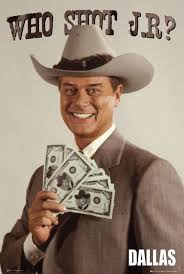
After watching the PBS documentary, we watched another documentary type film about television in the 80’s. In 1983, the final episode of MASH was aired, and had the most viewers of a series finale. It still holds the record for the most watched series finale of all time. After the series finale of MASH, situation comedies started to decline in ratings. This continued until shows like Cheers and The Cosby Show made their appearances. These shows were able to grab audiences with the good writing and relatable characters. Audiences were also fascinated with a show called Dallas, about a wealthy family who lived in Dallas, Texas. This show captivated the audience with an easy to love “bad guy” named J.R. Ewing. After being shot in one episode, it seemed the whole nation was fascinated with the question, Who shot J.R.?

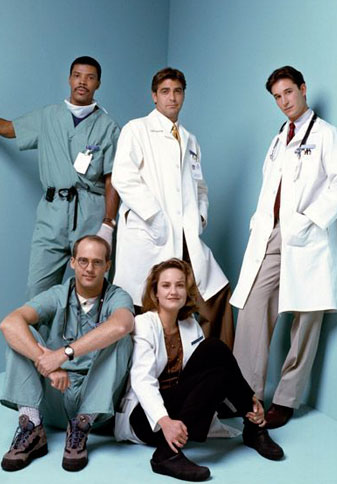
We also looked at a procedural show called ER. ER was a show that would take place in an emergency room, with the doctors, surgeons, and other hospital staff being the “secondary characters”. The real draw to ER was the intense scenarios that they would go through on each and every episode. ER wanted to captivate the audience by giving them a connection to the events that went on in the emergency room. In the episode we watched in class, we got to see how they used the cameras to cut through the hospital floor in a way that created suspense in tense situations. They also were able to give a sense of connection to the characters that were on the show. The connections between characters would give audiences a reason to tune in week after week, but that would not be the only reason why. The chaos and action of a hospital setting made it hard to not be interested after only one episode. It is no surprise that ER would go on for a total of 15 seasons.

-H. Nibert

An Introduction to Television

In the United States, television is known as a capitalist industry, like most if not all industries. Television, however, has a special way that it is able to “sell” consumers on these different products. TV is a delivery device for companies to show off their products to consumers, even if they are unaware that they are being exposed to these products.

One of the most influential writers for television in its early years was Rod Serling. Serling was a World War II veteran who would write stories to help with the traumas that he was left with after the war. He would get his big break into tv with the script for the show “Patterns”, which was an overnight success for him. This opened the door for him to be hired on for another script, for a show called “Requiem for a Heavyweight”. This was a huge success for him, with the show winning a total of 5 Emmy’s. Serling wanted to be able to write about topics that were considered controversial for the time. He had to change the scripts for many of his works to please the network sponsors, which upset him. To get around changing his scripts, Serling would write about controversial topics in a science fiction way. This launched his very successful series on CBS, “The Twilight Zone”. “The Twilight Zone” was a way for Serling to be able to show the horrors and fears of man without coming out and explicitly saying what he was talking about. It lasted for five seasons before being cancelled in 1964. After the cancellation, Serling would try to write scripts that would be able to do the same thing for him, allow him to write as therapy and show the flaws of man at the same time. Unfortunately for him, he was unable to do this successfully due to network sponsors. Rod Serling died on June 28th, 1975 at 50 years old after suffering a heart attack.

In the 1970’s, television began to take shape with programs that aimed to show the real life of families with shows like “All In the Family” and the multiple spin offs that would come from it. Shows like these would lead to the U.S. Government trying to censor the programs that networks could put out during a specific time slot. This led to networks and actors protesting these “family hours”, claiming that it was a violation of their first Amendment rights, which was backed up by the court system.