Fans of Fandoms!

This week in class we watched Galaxy Quest and learned a lot about U&G theory. I found it very interesting to go over the key needs of gratification; Cognitive, affective, personal integration and tension free needs. This conversation that we had in class on Monday made me very reflective of my own needs, thinking about what I actually needed versus what society tells me that I need or want. Social media not only uses and expands on these needs but it convinces us of new needs that may be completely unnecessary.

A big focus of this week was fandoms, to expand and explore this idea of fandom and fans we watched Galaxy Quest. I thought that this movie was very well done and I was very intrigued when it was the fans came to the rescue at the end. I believe that this was genius writing because it was an ending that so many people and fans of anything could connect aspire and dream about helping their heroes, even if they may not be real.

People often desire another life, at least for a moment, I think that the saying “the grass is always greener on the other side” if very true and that people need to dream of different possibilities that may or may not be possible, this is one of the bog reasons that fandoms are so big, fans can put themselves into their favorite movie, television or comics and imagine what that world could be like. Unknown.jpeg
There is also a group dynamic to Fandoms that is very strong, we watched a Ted talk at the beginning of the week which told the story of the women who before the internet thought that she was the only woman star was fan in the world, this shows how the internet can bring people of all sort of groups, not just fans, together and although them to connect and feel heard by similar minded people. In class, you were talking about how you met a group of people who “could finish your sentences” and how amazing that feeling is to be with a group of people that are so like-minded and understand your passion for something completely.

IMG_8095.jpgI too had this experience over the summer where I had an incredible oppirtunity to go to a pottery workshop in Wisconson with potters of all ages from all over the world. This was so amazing becuase even though we had such differnt expiremntces, we all got along incredibly well and understood each others passion for cermics in a way that nobody esle could. (picture on the left is me loading the Anagama kiln full of our work)

-Grace Hanlon
Week 12: News

This week we read, watched and talked a lot about News. I find the topic of news so interesting to talk about especially in a college setting where most of the students have grown up with receiving the news mostly, if not only on their phones and via technology.  In the chapter it stated that, “Seventy percent of young adults said their social media feeds include a mix of viewpoints, increasing their chance of reading a wider array of content” (page 236) I find this is important, however I am curious at how accurate that images.jpegnumber is, and if people release the full extent of the biased news that they receive. While new technology gives you access to an abundance of news, it allows you to choose what you see, leading people to gravitate towards what they agree with or what they are comfortable reading and hearing.
In both The Newsroom episode that we watched this week, we were able to see the struggle of the newsroom at that time and there right to repot true news in oppose to exaggerated news or news that was purely there for entertainment. They were trying to get their ratings up and make sure they didn’t lose any viewers, but in order to do so they had to share stories that were more interesting and replace them with stories that may be more boring but at the same time much more important. Unknown.jpeg

I personally do not follow the news as much as I would like and struggle to find valid and interesting resources. Any news I do find I will often search up after the fact and look into the summary, however, this leads me to read often very biased responses to the news so that I do not get as frustrated reading a report that I strongly disagree with. In such a divided time within our country, the internet and social media are filled with an abundance of strong and split opinions, each believing they are right. This does not leave much room for a balanced story that simply repost what is happening, rather than all the problems and thoughts that come with it.

Less and fewer people seem to have time for the news, whether they actually do or not the idea of time seems to be crushing on this younger generation, where things are often rushed and have down, information only partially read oreceiveded. I do not know if this is due to increasing technology or just somehting that always is a fear, but I think it hinders the importance of news to many people.

-Grace Hanlon

mean world syndrome

Television, Cell phones, and other media have intertwined with our everyday life. I found the video we watched in class on Monday very interesting and its focus on the mean world syndrome that media has instilled with us. Mean world syndrome is the idea that the more negative information and news that you are shown and influenced by the more dangerous you will the world is, and on a personal level, the more likely you may think that you have the chance of becoming a victim. To expand from this it has been found that the more you feel as though you will be victimized the more likely you will be (a self-fulfilling prophecy). Gerber expressed that the more television that you watched (the more media you were exposed to), the more paranoid and fearful you may become; the cultivation theory. What is most fascinating about this theory is that even though the crime rate is shrinking drastically, the majority of people believe that it is increasing and that there is a higher chance of the day to day violence.Unknown-2.jpeg

Something else that I found very interesting was the idea that we are all born into a mediated environment. We have all constantly been exposed to media since the time that we were born, there is no “before” for us, especially our generation, just “now” the media current effects on each individual, the only thing we have to compare is comparing each others screen usage.

In the chapter we read this week we focus on ethics, what the media deems right and wrong, as well as who decides. It appears to be that it is the media’s “responsibility” to inform the general public of what is going on in our world. As the book pointed out, and I agree, I think the harshest consequence to a journalist or broadcaster is the public opinion. If the public finds out that you lied or shared an extended truth, it is your reputation and company that will get hurt, less than the consumers who will most likely stop watching or trusting that specific source.

While each is entitled to their freedom and speech, professional codes often enforce or simply recommend not misrepresenting information to their consumers.  We all have grown up hearing “not everything you hear or see on the internet is true”, while this has been preached to us from a young age I think that false information can still be quite harmful to those who may be easily persuaded, something we all may be prone to at times.

-Grace Hanlon

Movies and Media

This week in class we watch the documentary “This Film Is Not Yet Rated”, I felt that this was extremely interesting and informative.  I really enjoyed how the documentary was put together including clips taken from rated movies and how they went about finding out information from a highly secretive MPAA. images.jpegI think it is very interesting that in a society that prides itself on being so free and opens the movie industry has so many restrictions. What I find insulting and concerning is when a movie is supporting a positive message that needs to be communicated but it is still muted by the MPAA. For example, in the movies that focussed on portraying women’s pleasure the MPAA was more likely to give the movie an NC-17 rating as well as movies that “exposed” gay sex.  The MPAA reasoning for this was that they didn’t feel it was right to show sex in positions that weren’t “accepted by society”, this was said to be in fear of an increase in sexual activity between teens. In reality, I think that limiting sexual content (to a degree), doesn’t allow teenagers to receive answers they are asking themselves, therefore potentially putting themselves ina more dangerous position.

The movie that we watched was created in 2005, while that was only 10 years ago I feel a lot has changed not only with an increase in technology but within the general opinions of American citizens, parents, and people. It makes me curious as to if the system has Unknown.jpegchanged at all and if those raters have gotten either more or less restrictive. In a time that is so split both in political opinions as well as just general ideas, I wonder who the “average” American parent is and if they are even right to have certain opinions on what kids have the right to see.

I think that with the increase in media and technologies, the movie industry has the opportunity as well as the expectation to help eductae children and teenagers safely and correctly on topics such as sex, violence, war and many more. They can provide a trustworthy resource that can show people a direct message, something that social media is overflowed with, and therefore cannot be trusted. However, at the moment, the industry is unable and doesn’t share such a message but rather displays an entertainment video that is targeted towards the white male perspective.

-Grace Hanlon


Television-Week 2

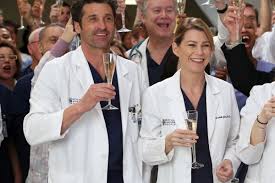
This second week of television we progressed into more modern shows and television aspects ranging from the 1980s to the early 2000s. Today in class we watched an episode of ER, as someone who watched many episodes of Greys Anatomy, I found it fascinating to see the difference in style and focus between the character and the ER as a protagonist. In Greys Anatomy the surgeries and medical issues almost work around the personal drama among the coworkers. I think it is interesting the priorities that both the audience and the producers have when comparing the too. I think it says a lot about our society’s mindset when comparing what we what to watch to get away from real life.

images.jpegUnknown-3.jpeg

Aside from ER, we also watched the first episode of the Netflix episode The Eighties. It explained the jump from just the late 70s to the 80s and how much cable changed people’s relationship with television as well as each other. I thought it was interesting how different cable changed how people watched TV. In the film, they mentioned how the late 70s was the last time that people gathered around the television like it was an “electric” fireplace. Great examples of this include ER, Dallas, and M*A*S*H*, M*A*S*H* finale which too this day leads the most-watched episode at the same time. It is amazing how something such as a show could stop time for that many people and have them stop their lives to watch the finale.

In this day and age, television brings people together only in access to ideas and knowledge, however, overall I feel as though it brings people apart as that they can each watch there own show: alone and in a separate room. The abundance of choices doe snot give the same excitement fro finales or airings that the pre-cable era gave.

Unknown-4.jpeg

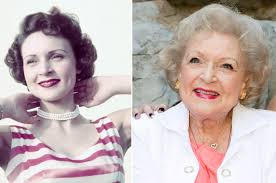
Finally, on Monday we watched the Pioneers of Television, a documentary about incredible and inspiring women of television and comedy. It was very interesting to watch the struggles and expectations fo being a woman through the lens of the television world. One of the most influential people, who still is making people laugh is Betty White. One of the things that I find most interesting about her is that she is still alive. I think this is a great example of showing how quickly everything is this technology era has been changing. All the women in that video were truly inspiring.

Unknown-5.jpeg

-Grace Hanlon

Television!

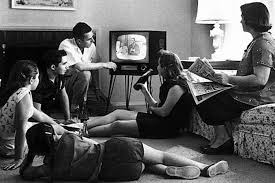
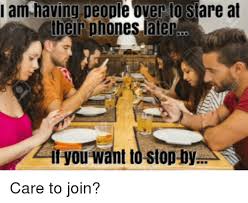
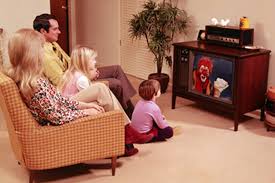
This week our focus was on television and I find it fascinating how much has changed about our society in such a short amount of time. Simply the dynamic of television and media in general in a household has changed dramatically. What used to be about bringing family and friends together seems to now separate us more than ever. For example, in the episode of The Seventies that we watched, we learned about a family hour and Saturday Night Live, I think it is so interesting to see how people lived their lives around these airings of shows. 
Unknown-2.jpegUnknown-1.jpeg

To go off of that, we learned about how the government wanted to monitor family hour, claiming that Television could not show certain things prior to what they deemed an appropriate time. I think it is interesting about how angry this made both the consumer as well as Hollywood, what’s even more interesting is how now are media seems to control us even more, yet we don’t seem to care about these effects. 


In my art history discussion this week we always referenced the use of television, however, from the point of view of an artist. We talked about how in the later 60s, and early 70s broadcast networks would allow the artist to play around in their television studios during the day, or what was known as “dead time” (where no program was scheduled to play). Many of these art pieces would be a variety of colors, designs and flickers-therefor many individuals with TVs in their homes were deeply concerned because they thought the TV was broken, it freaked many our that this “private” TV that was in there holme could be accessed and changed by the artist. I thought this was both very interesting and referenced what we talked about in Mass Media. 

“The Medium is the Medium” by Fred Barzyk is one example of this: (not exact clip, but the similar idea) 

Finally, I found the Rob Sterling documentary very interesting, in a time which I feel there are an influx and high variety in both television shows and movies, I think it is fascinating how hard of a time he had getting producers to believe in his fantasy scripts. I think his impression on television and media, in general, was a lot more lasting and significant that he believed. Changing both what producers created and the consumer/viewer wanted to see.

-Grace Hanlon