
Human behavior can be changed by a almost anything. Studies attempting to discover why date all the way back to the 1920’s. In the first attempt to study media affects from 1929-1932 scholar Herbert Blumer led a group of scientists in conducting a series of studies aimed at discovering the overall impact movies have on children and adolescents. This research is now referred to as the Payne Fund Studies, named after the private foundation Payne Fund, which provided the financial backingnecessary for the project.
Agenda-setting describes the way that media attempts to influence viewers. News broadcasts use this theory to “help” viewers decide what is the most important issues in the world at that moment. In class, we looked at a video concerning a former congresswoman that was interrupted by breaking news, it must be something very important to the world, right?
WRONG. Justin Bieber got arrested, what a tragedy.

We also watched a film concerning human behavior and how it changes based on obedience to authority.
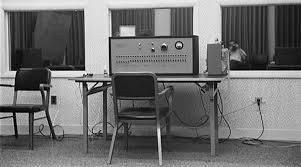
In May of 1962, a human experiment was conducted using a shock method. The subjects were unaware of what he was really studying. He used teachers and students and led them to believe that the students would learn better when they are shocked, however, the was really testing how far the professors would go on the voltage. Some teachers questioned it and stopped while others went to the highest voltage they could because that is what they were told to do; it doesn’t matter if it is ethical.
There was also an incident in a Mcdonalds where a random caller pretending to be a detective called a manger accusing a teenage girl employee of stealing. The caller then instructed the manager to strip search the young girl, and then call in her fiancé to keep an eye on her. Neither of the two adults questioned the caller and things were taken way out of hand and a sexual act was instructed by the caller and the fiancé made the girl par take in the disgusting actions.
Studies show that people are less likely to help in a situation if they are in a group of people. They will wait for someone else of the group to take action first. However if they are by themselves, then they are more likely to act out and do something about it.
An example of this is fraternity boys practically watching and letting a pledge die because of hazing gone wrong. Another is when a woman was stabbed to death, her scream heard by at least 30-50 people and none of them called the police. One person did, but it was far too late to save her.
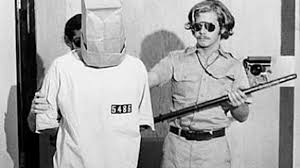
Another experiment concerning obedience to authority was the Stanford prison experiment held in 1971.
They had 70 men volunteer to participate in the experiment and they ended up taking the 24 strongest and healthiest. Guards were given a uniform while the prisoners were practically dehumanized by getting numbers in place of their names. It was taken as a joke at first, with the prisoners rebelling the first night. But then one of the guards decided to step up and be the hard ass and make their lives a living hell. By the second day some prisoners were taken into solitary confinement. Prisoner 8612 suffered from a mental breakdown and was sent out of the experiment. The guards continued to force the prisoners to perform weird things, they even made them preform a skit tell each other that they loved each other. There was another mental breakdown however the guards kept pushing the prisoners because nobody was telling them when enough was enough. Things got way out of hand to where it felt real rather than an experiment. One of the guards fiancé’s came to visit and saw the horrors of the prisoners with paper bags over their heads and said that what they were doing to those young boys was terrible. She threatened to leave the guard if this was who we was becoming, thinking that what he was doing was okay. The experiment was shut down after just 6 days.
 Mass Media & American Life - Fall 19