
The evolution of the studio system in classical Hollywood played a key part in the rise of motion picture films. The beginning of studio systems can be traced back to the 1920’s, which was referred to as the “Classical Era.” What this means is that these studio systems relied on factory-based production as well as vertical integration of production, distribution, and exhibition. Vertical integration simply means that the production company has ownership over these three stages in the film process, which means they receive all of the profit. This led to the development of the “Big Five” studios and the “Little Three” studios. The “Big Five,” which were vertically integrated, consisted of MGM, Warner Bros., 20th Century Fox, Paramount, and RKO. These studios not only produced and distributed films, but operated their own theater chains as well.

The “Little Three” consisted of Universal, Columbia, and United Artists (UA). These studios produced and distributed top feature films, but did not own their own theaters.

During the Great Depression and World War II, the studio system was at an all time high. Since these two crises were going on, this basically forced the government to tolerate the studios’ monopolistic control over the film industry. This allowed studio systems to maintain their factory operations as well as the “employees.” People that worked under these studios ranged from top stars to stagehands.

The 1940’s proved to be a unique era for the film industry. In 1946, the studios’ had their best year in terms of revenues and profits, but by 1947-1948 the industry was on the verge of collapse. There were two major reasons for this. The first being the Supreme Court’s 1948 Paramount decree. This was an antitrust ruling that resulted from persistent legal challenges by independent exhibitors, which forced the “Big Five” studios to sell their theater chains and prohibited the collusive trade practices that were crucial to the studios’ control of the motion-picture marketplace. The second reason for this decline was due to the rapid growth of television, which was propelled by sustained economic prosperity and wholesale changes in postwar American lifestyles. Watching television soon began to replace going to the movies because you had a television right in front of you. There was no need for people to go somewhere else to watch entertainment other than their living room. Luckily, the studios survived due to adapting to the new environment. Studios simply changed the way they made movies and did business. The studios concentrated on financing and distribution rather than production. This meant that studios had to now rely on independent producers to supply “packaged” projects that the studios would “green light” for production. This then gave more power to the independent producers. This led to the evolution of new American Cinema. Big name directors like George Lucas and Steven Spielberg began to dominate the industry.


This led to the development of one of the most famous films called Jaws. Jaws was the breakthrough “summer blockbuster,” and the first film to gross over $200 million at the box office and to return over $100 million in rental receipts to its distributor. Because of this, multiple sequels were released.
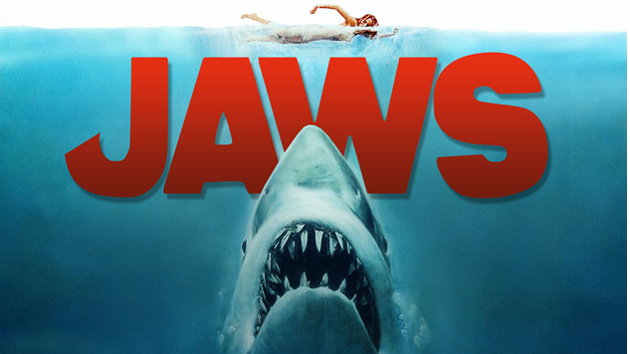
Jaws brought a spark back to the film industry, which paved the way for many more famous films. Some of these include Star Wars and Superman. The industry recovery accelerated in early 1980’s, which soon led to the emergence home-video and cable industries.
-Tyler Tanevski
 Mass Media & American Life - Fall 19